please see Events Calendar for further details
News and Articles
Bee Week – St. Catherine’s Primary School, Penrith.
During June 2023, Penrith Beekeepers led a ‘Bringing a Buzz to the Curriculum’ project at St. Catherine’s Primary School, Penrith.
-
 Listening Intently to see how candles are made
 - Concentrating to keep the wax straight
- Wonderful Teamwork Making Candles
- Very Proud of Our Candle
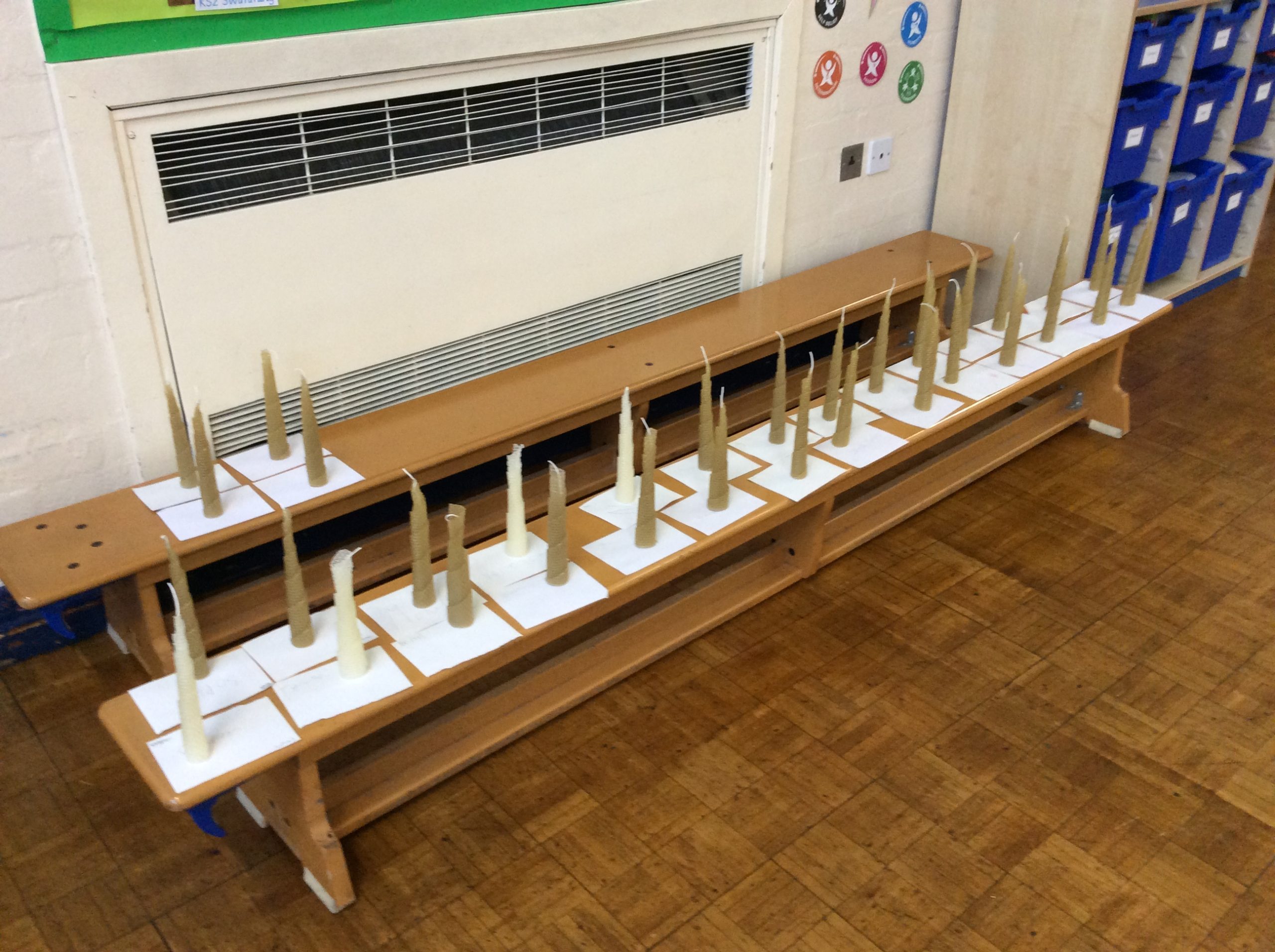
- A Selection of Candles Made by the Children
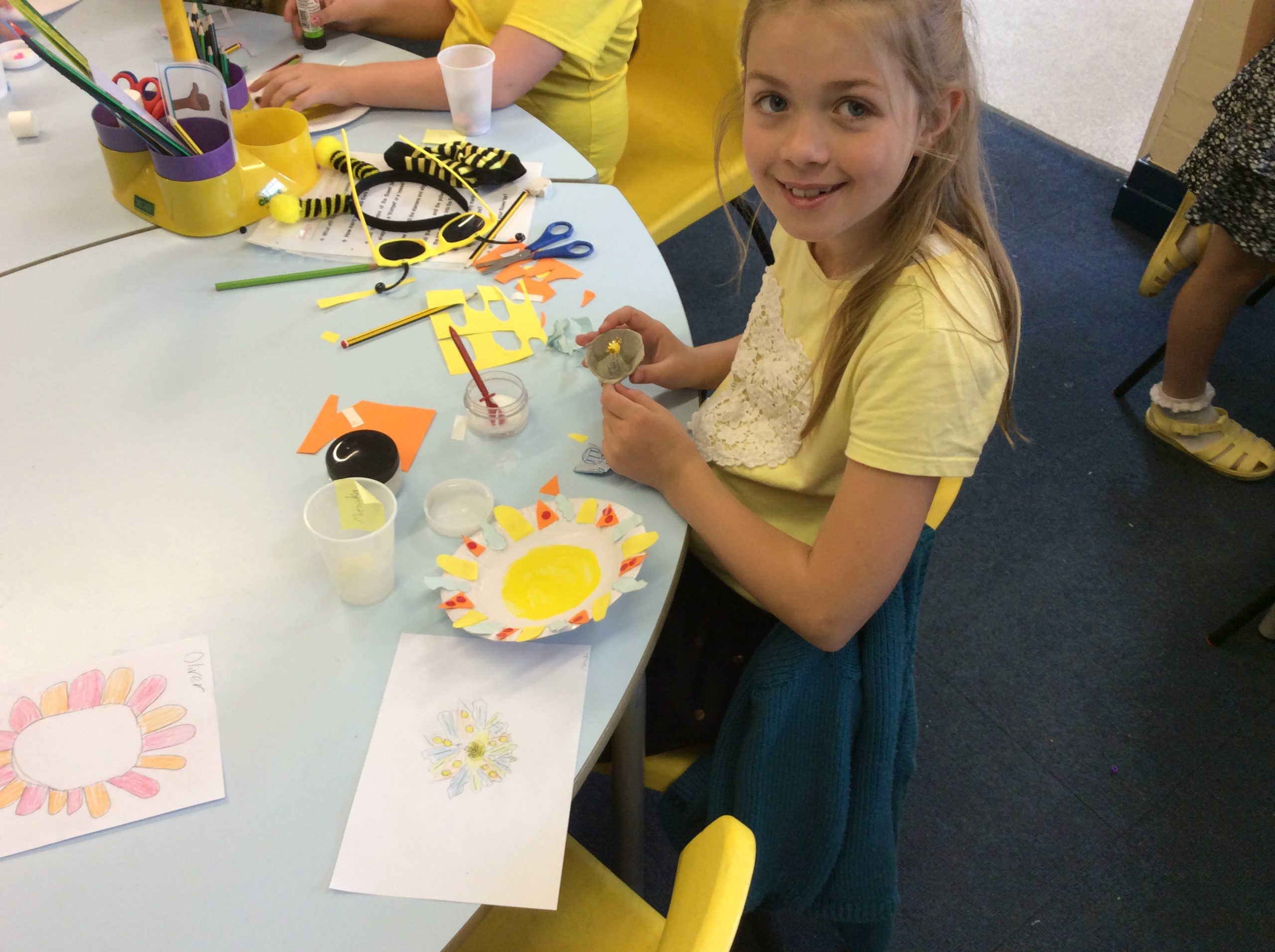
- Making Flowers
- Bee Friendly Flower Designs
- More Wonderful Flowers
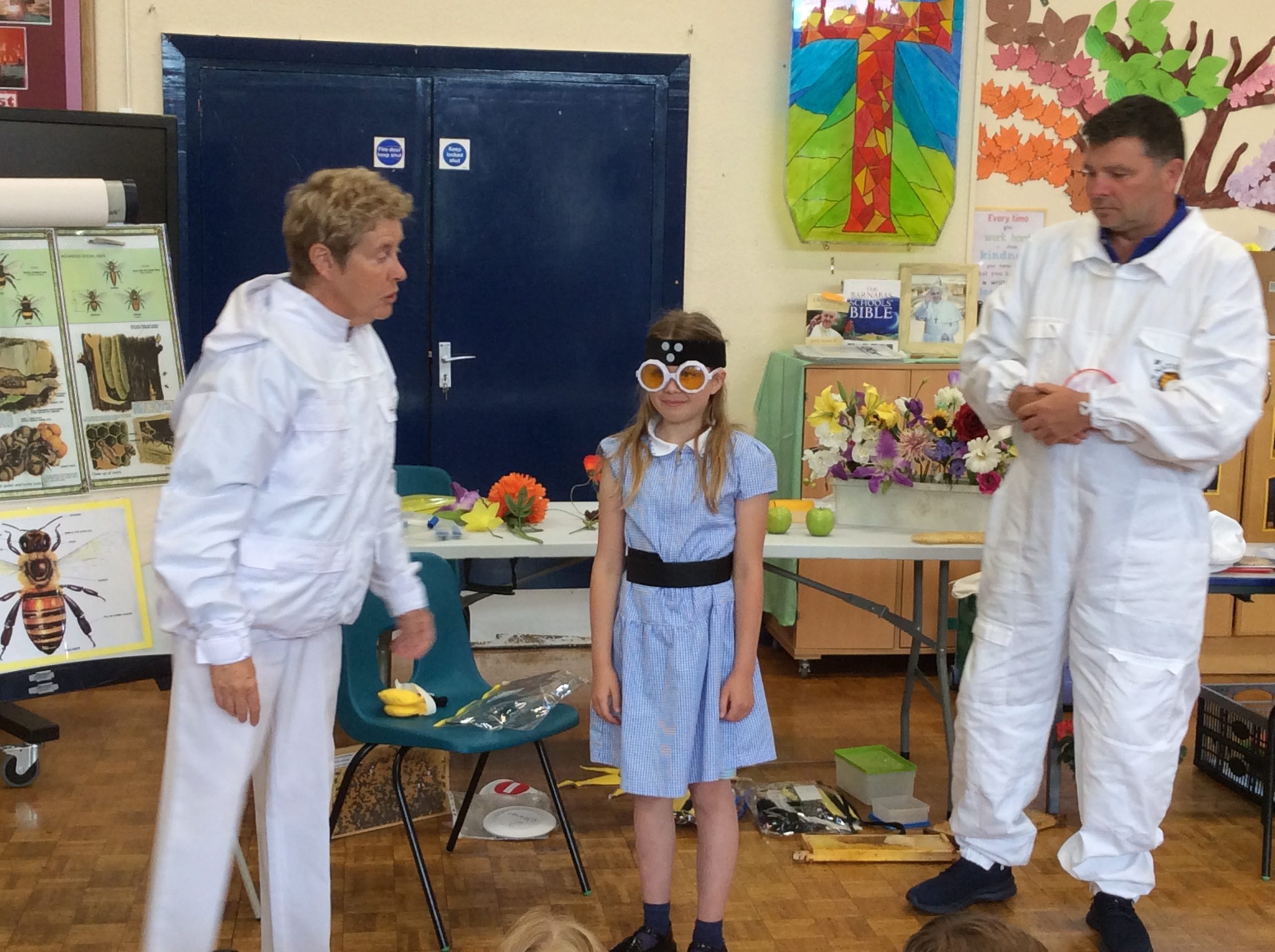
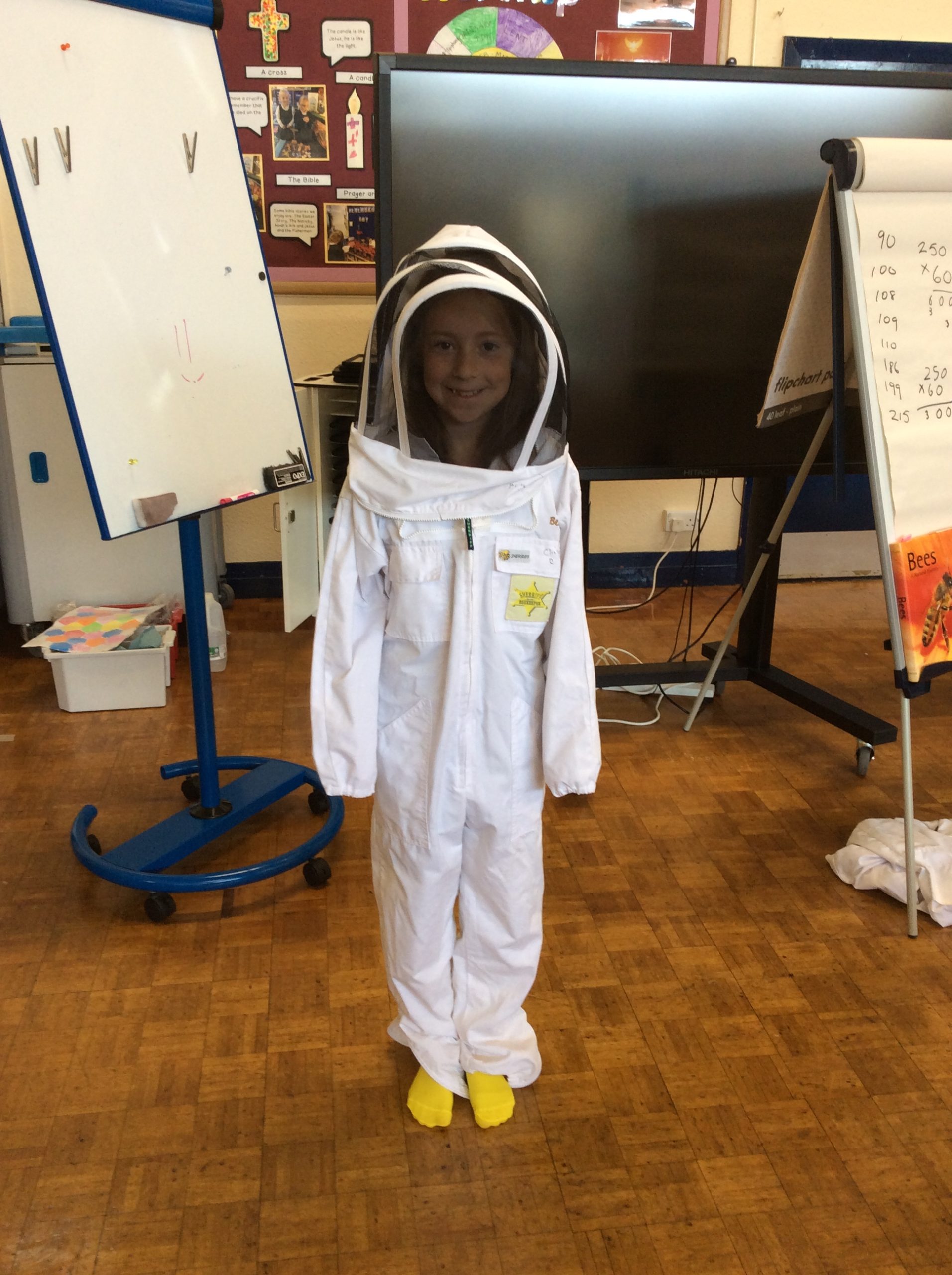
- Dressing up as a WorkerBee
- Learning About The Stages of a Worker Bees Life
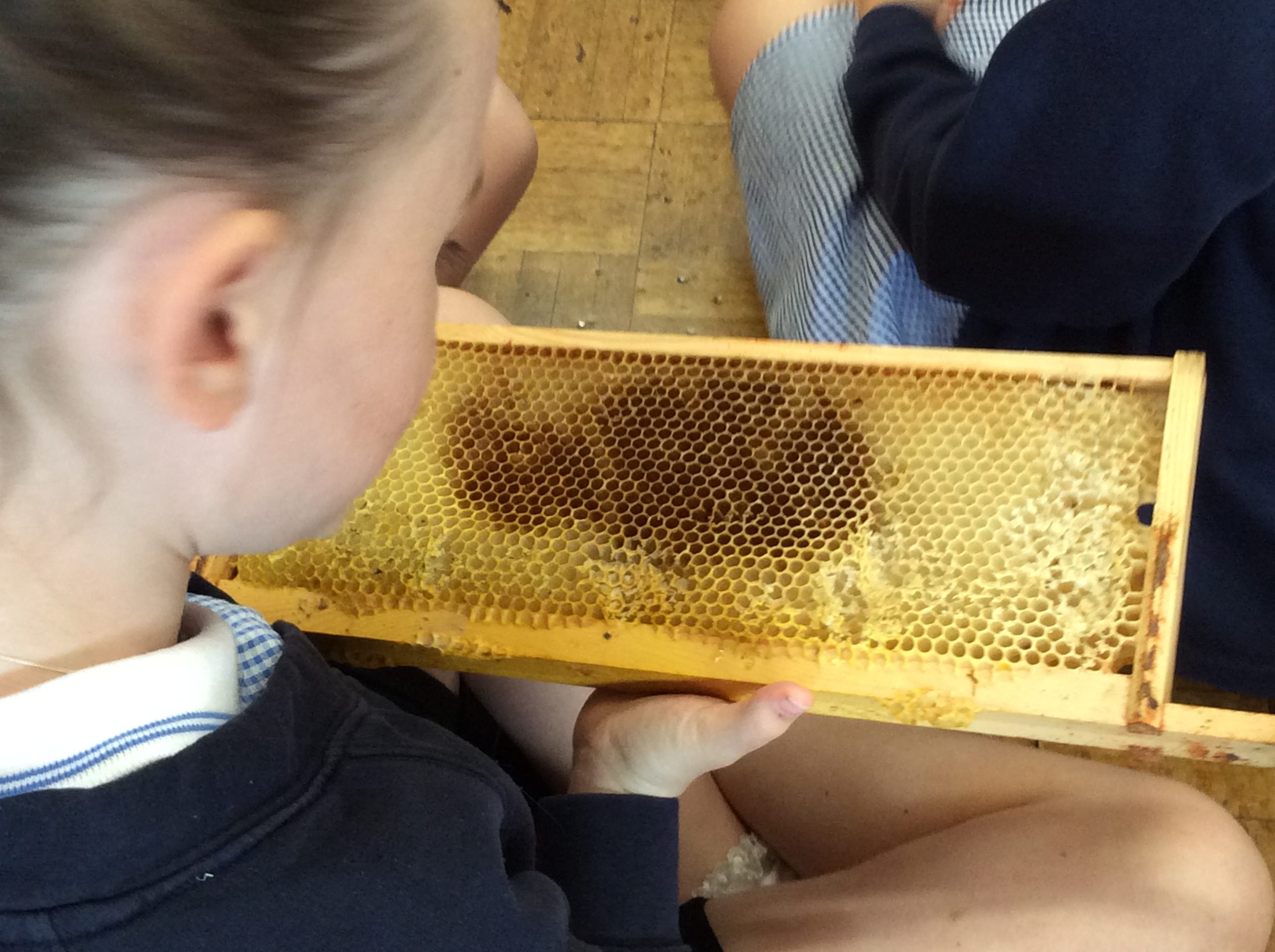
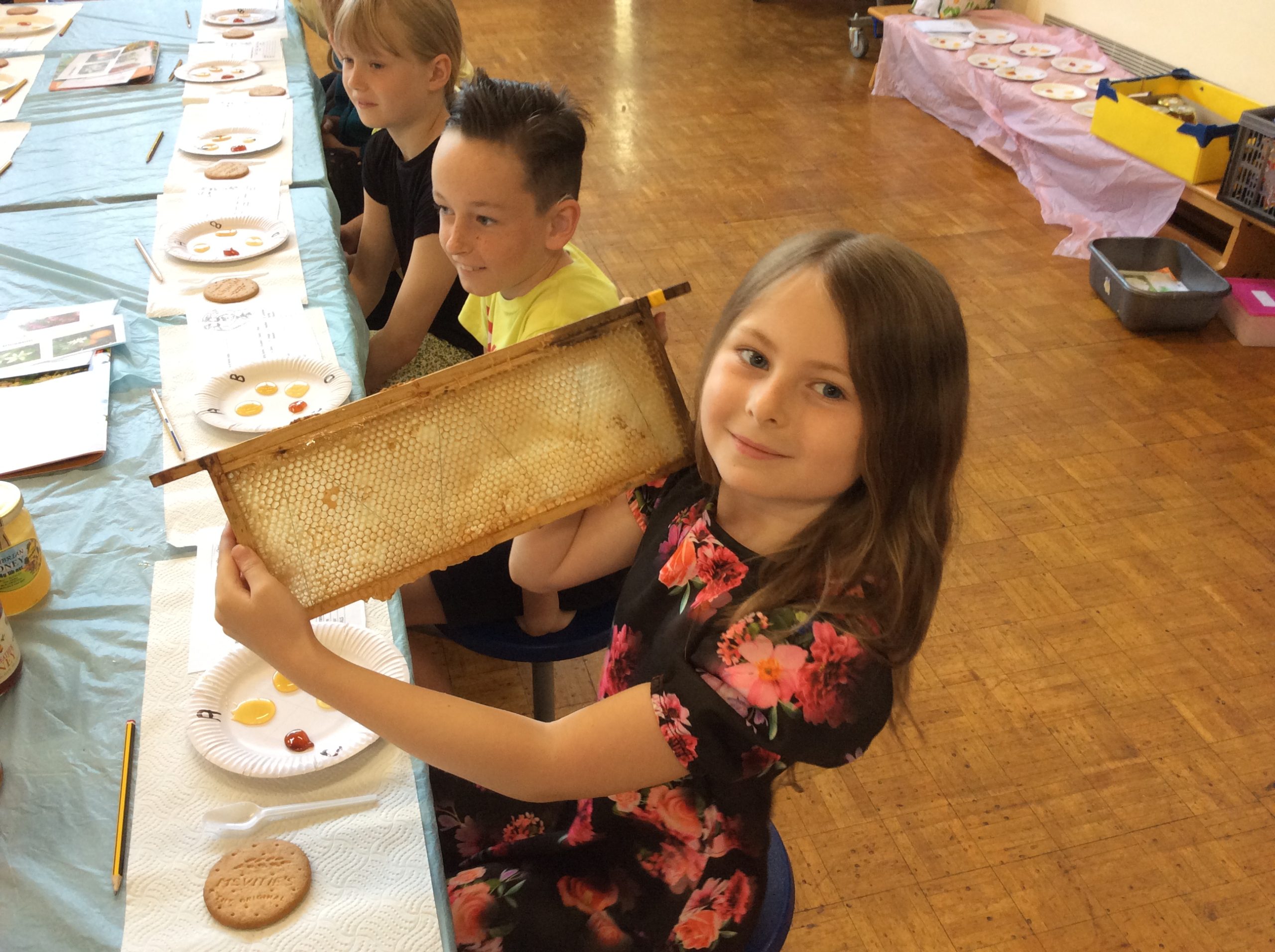
- Inspecting the Honey Comb
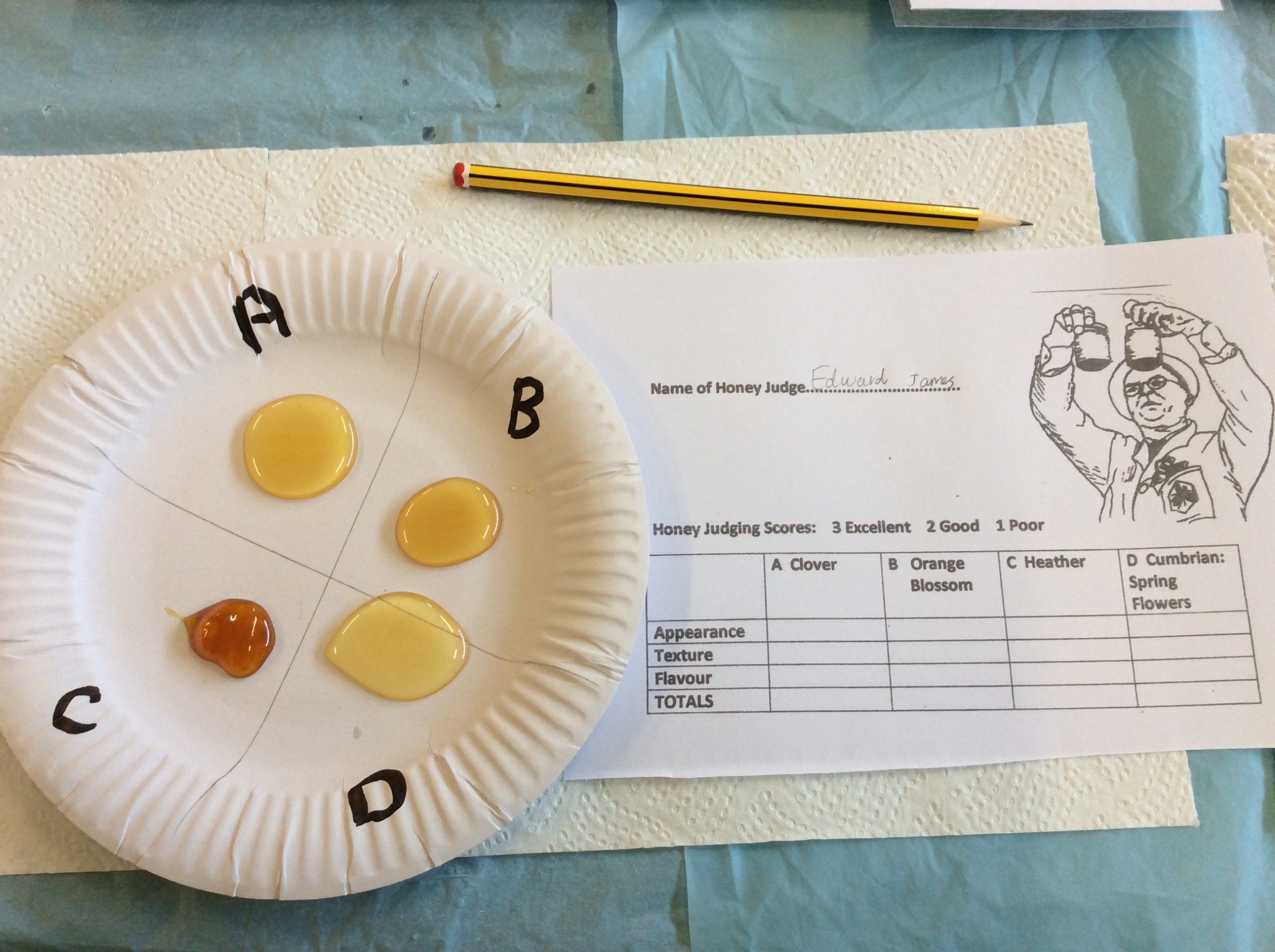
- Honey Judging With 4 Different Honeys
- Some Of Our Talented Honey Judges
- Inspecting a Honey Frame
- Very Clever Bees made this
-
 Beekeeper Sophie
 - Looking for the Queen
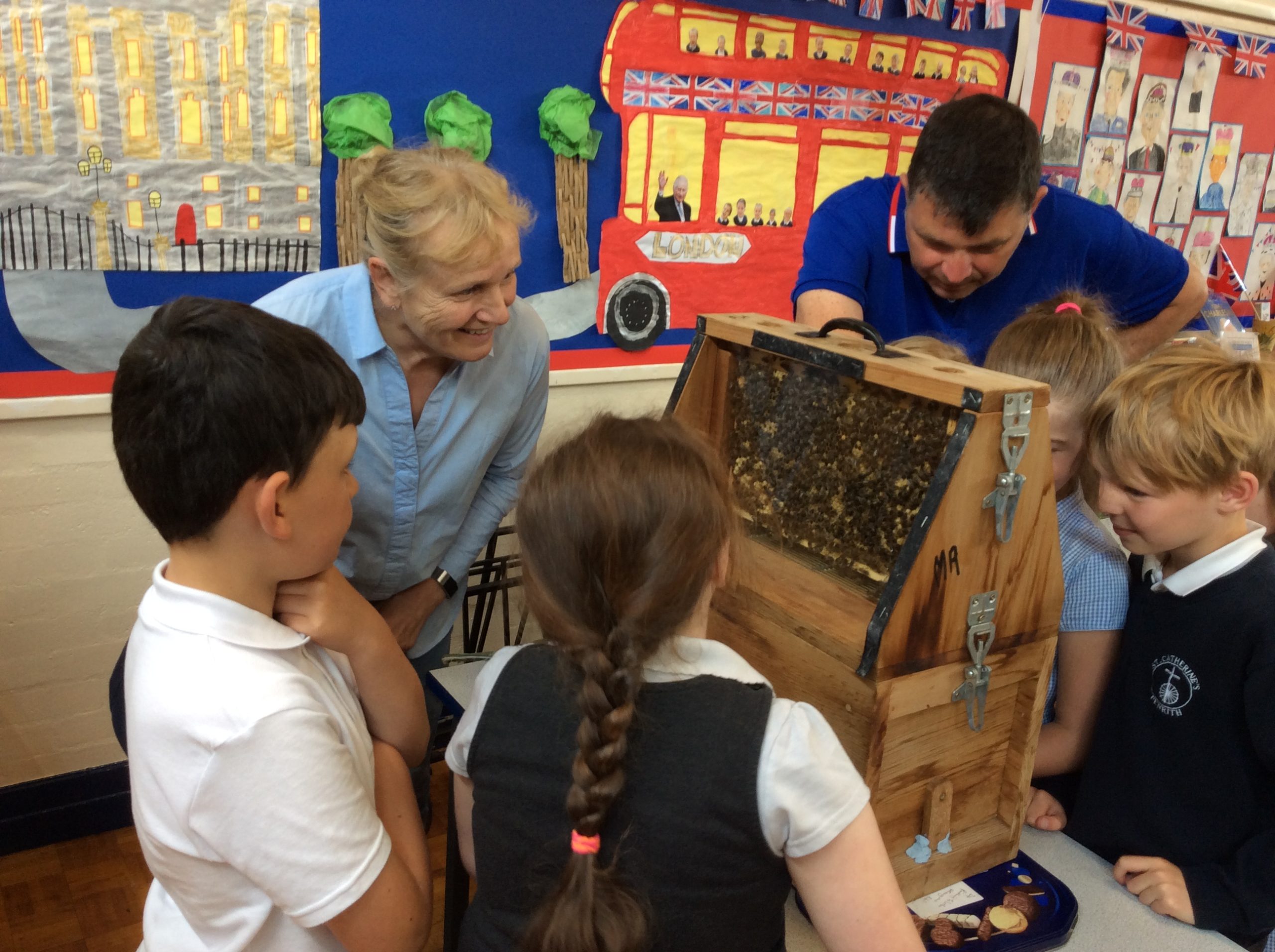
- Everyone Was Amazed To See The Observation Hive
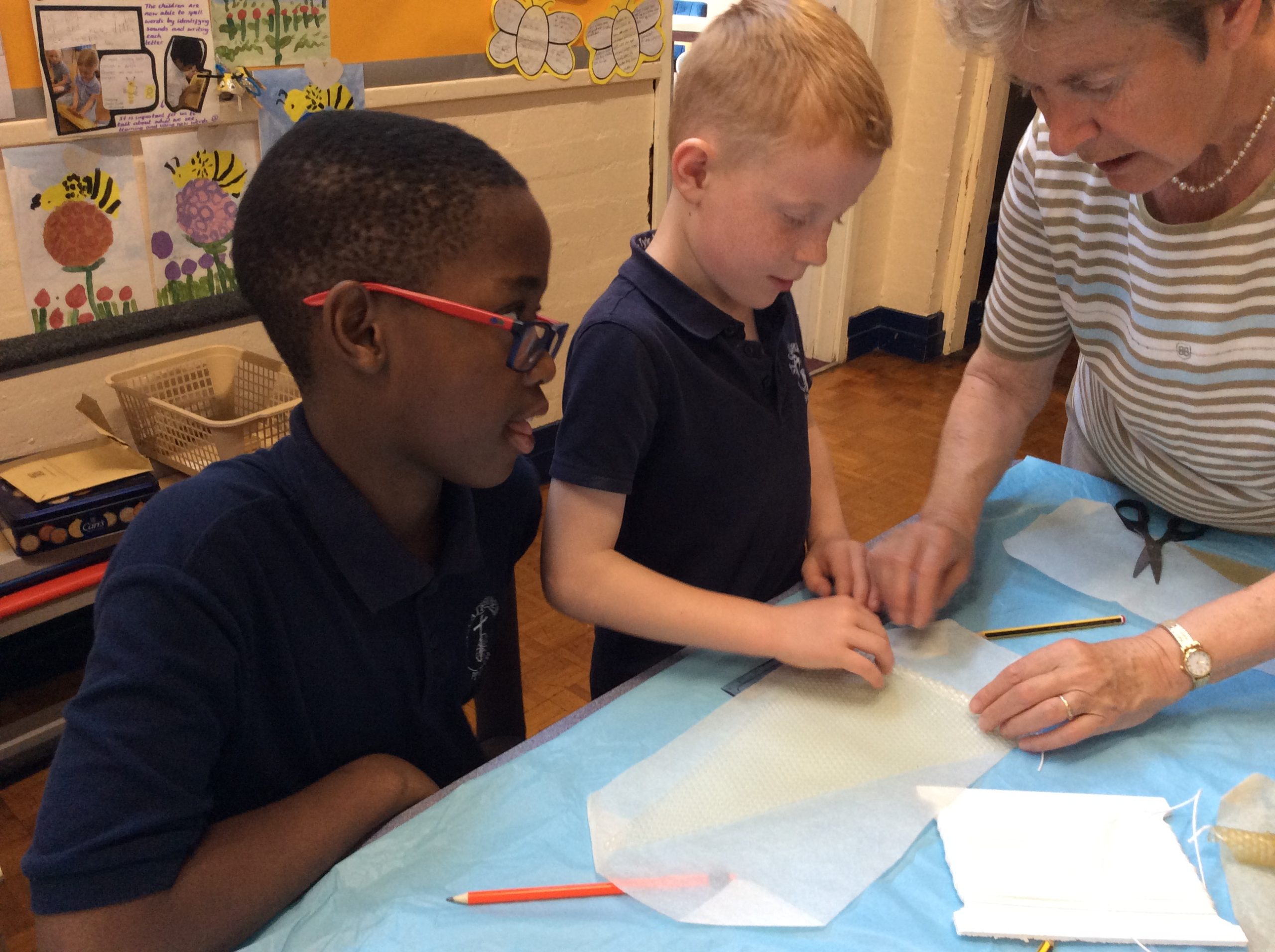
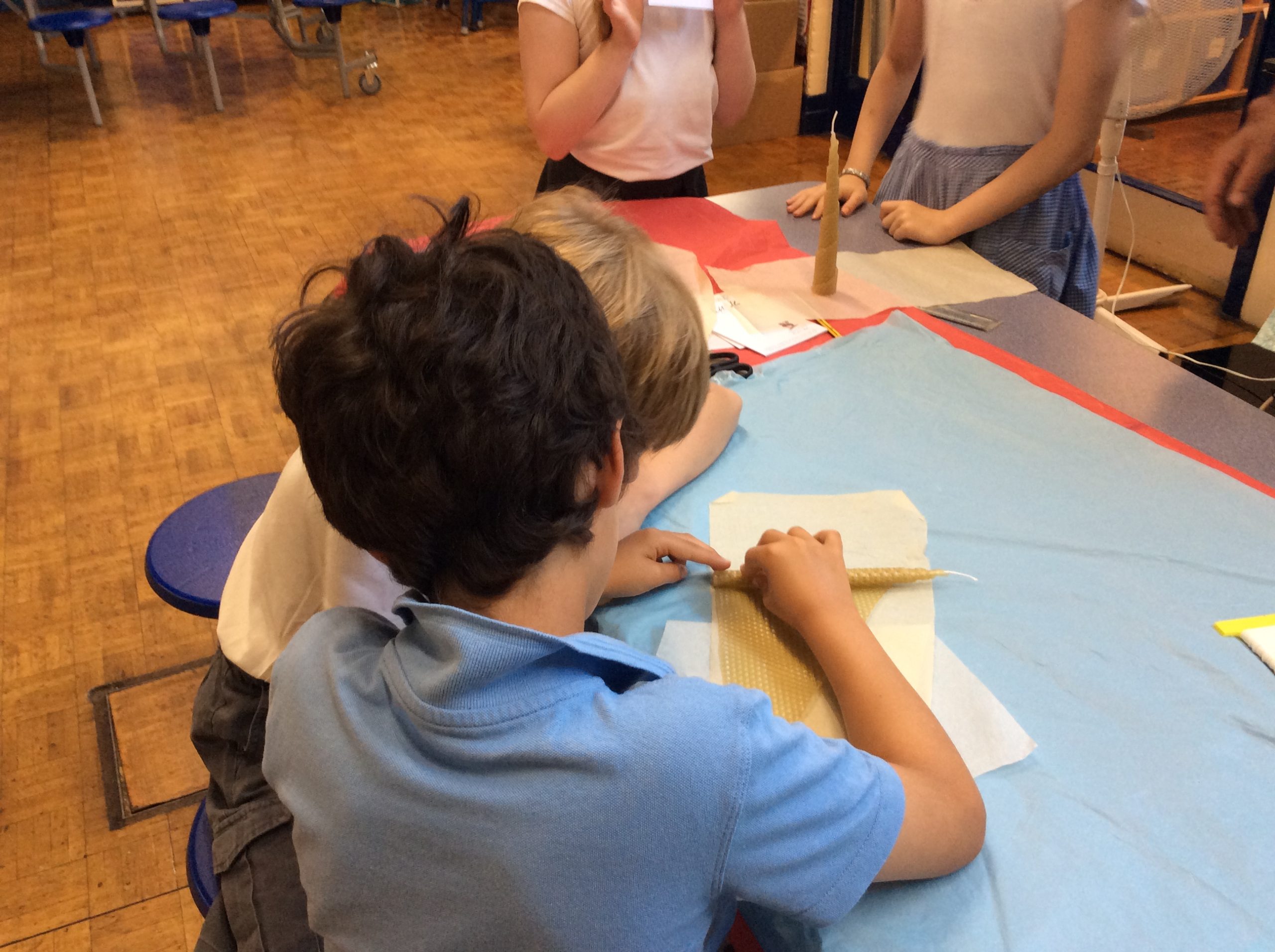
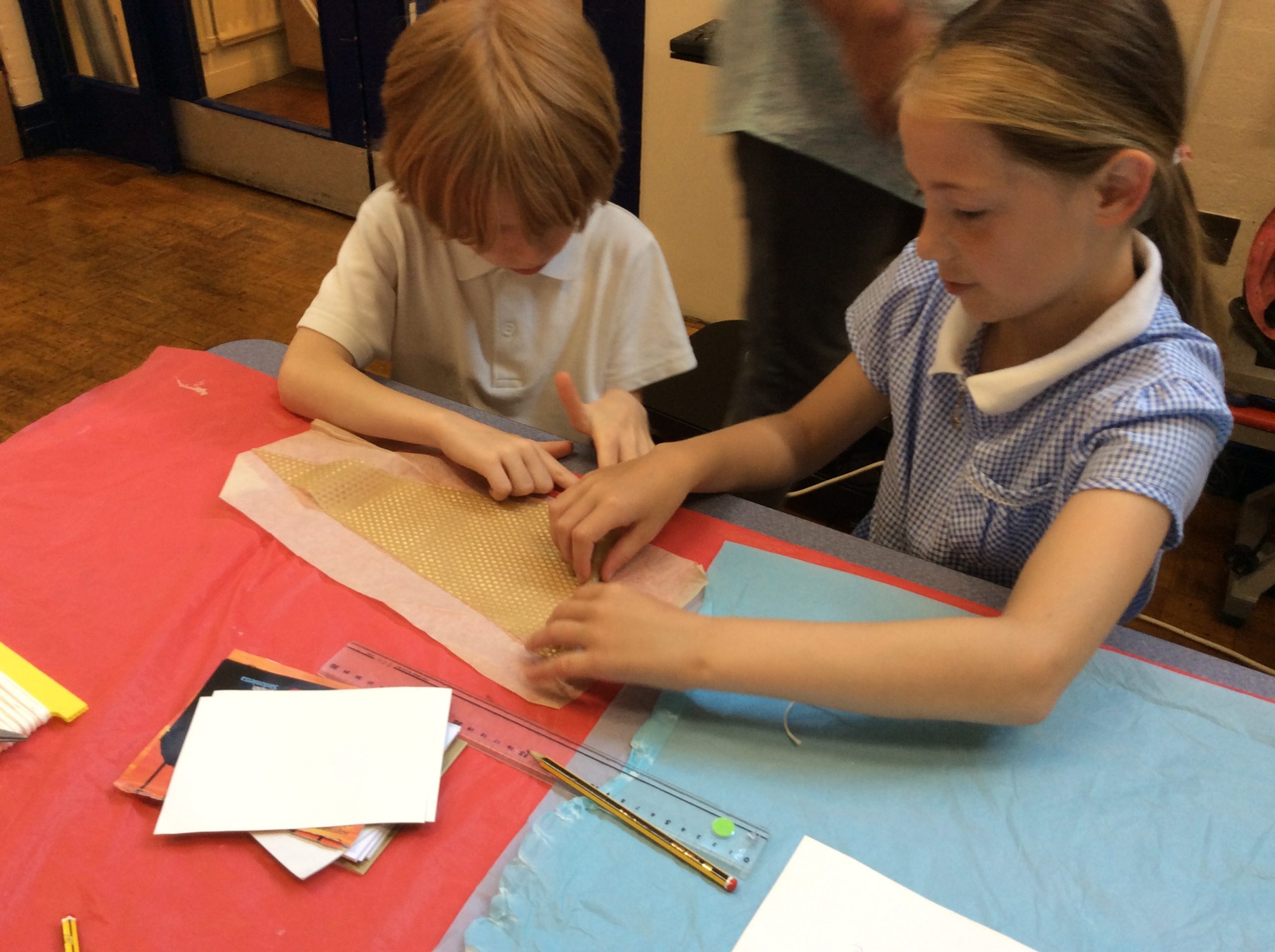
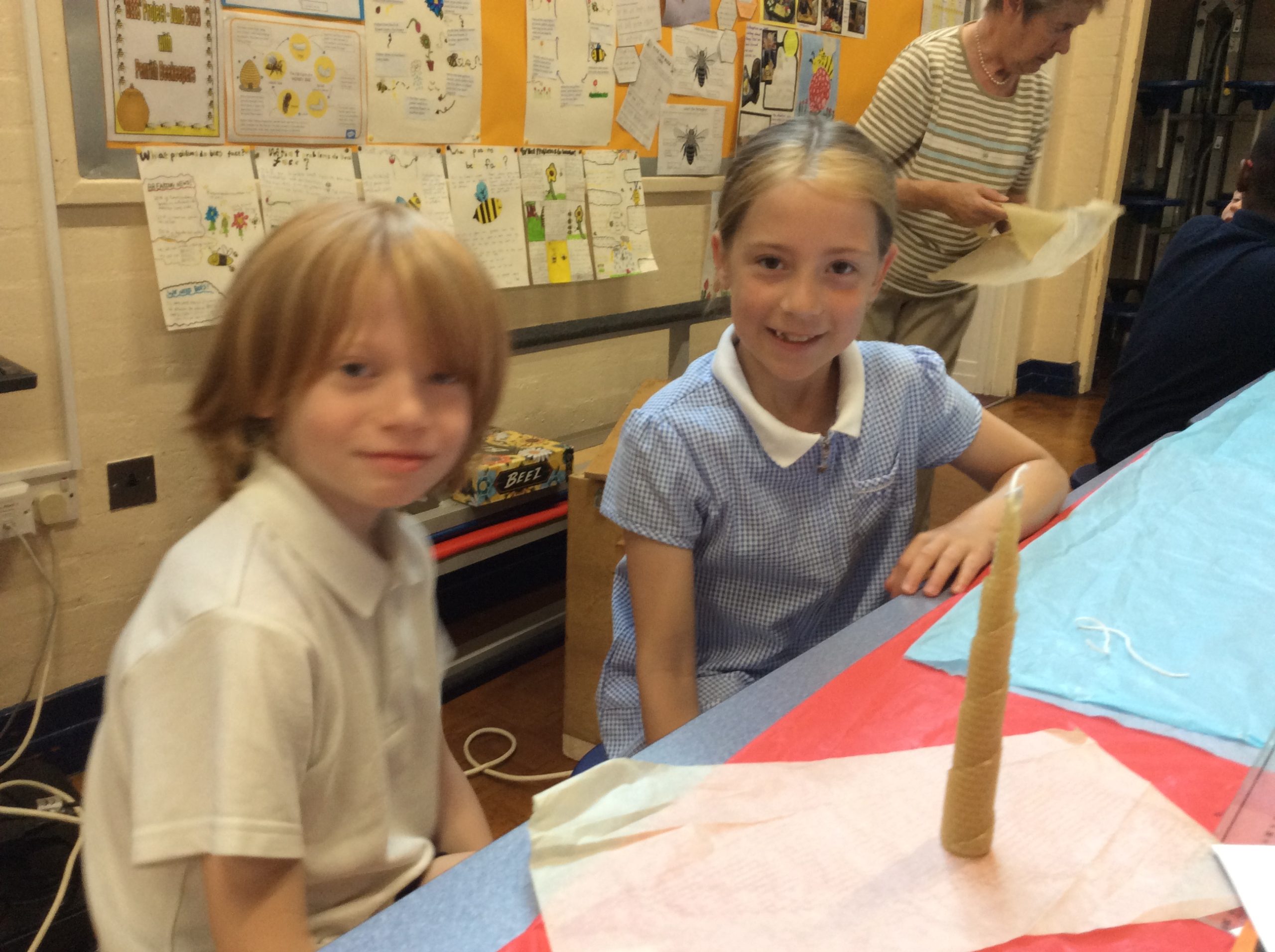





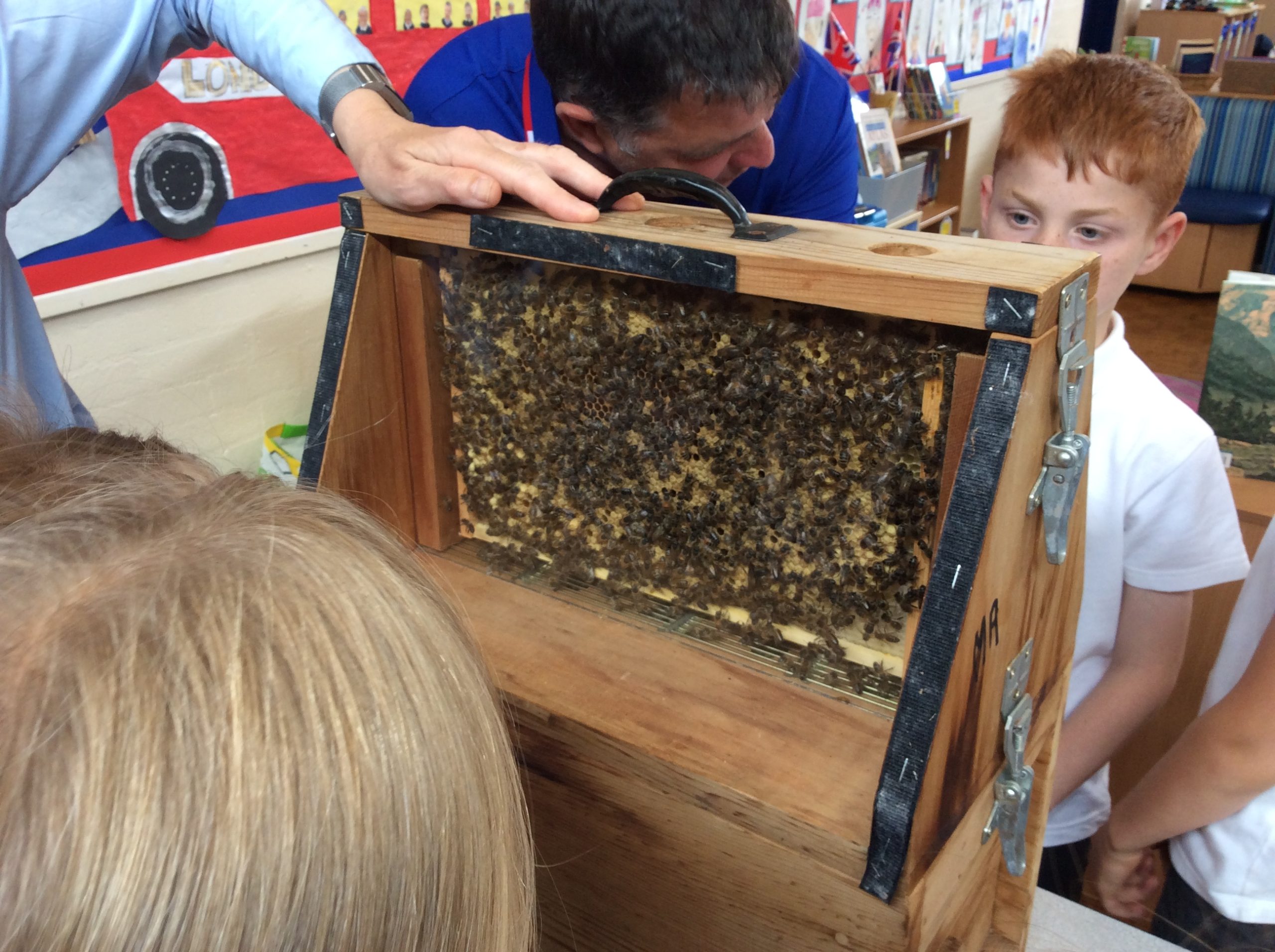
For one week, all the children in the school from the youngest children in the reception class to the oldest children in Year 6 participated in sessions which introduced them to the world of the honey bee. It aimed to raise their awareness of:
- the value of bees to our environment
- the vital role that they play in pollination which helps plants to produce food that we need to eat,
- the ways that the survival of bees and other pollinators are being threatened and what can be done to help them.
At the end of the project each class presented aspects of their work in an assembly to which parents and friends were invited . It was inspiring to see the creative ways in which the children had interpreted the information that they had learnt through the project and their own research.
Teachers and pupils provided feedback on the project by completing a brief questionnaire. Examples of their responses are as follows
Which activities do you consider have been particularly beneficial for the children’s learning?
Key Stage 1:
- The practical resources helped the children to visualise what they were being taught.
- The children enjoyed the new experiences- seeing the hive and tasting different kinds of honey.
- The children creating + designing their own flower- following the in put this allowed the children to problem solve and create a flower accessible for a bee.
- The honey tasting allowed the children to develop individual opinions and understand why honey tastes different.
Key Stage 2:
- Anatomy of the bees – dressing up.
- Roles of different bees in the hive
- Looking at an actual hive with bees in
- Flower testing
- Honey testing
- Class 4 said that they were better informed and they understood the problems facing them.
- Being able to see the bees in the hive was absolutely amazing, as the children were able to visualise how the bees interact.
- The anatomy of the bee was a good activity too (when the children were able to dress up at the front) as this was easy for the others to understand how the nectar is transferred.
- Tasting and rating the honey was super, as a lot of children hadn’t actually tasted honey.
- Rating the flowers for pollination was also an interesting activity.
Additional comments:
Key Stage 2:
- The children were literally ‘buzzing’ with excitement about the week and what they had learnt. This was shown in the end of the topic assembly, where the children shared their learning and the beautiful work they had completed. Maths, Science, literacy and art were covered and everything was connected to the National Curriculum and thoroughly thought out. A brilliant week was had by all!
- The children absolutely loved the activities and absorbed lots of facts.
- Fantastic- thank you so much for the time and effort. The children have been talking about it since and have taken on board the importance of bees!
- It was a pleasure to do work with the children that did not rely on digital devices or the internet.
Excursion to Manchester Beekeepers Association
Excursion to Manchester Beekeepers Association on July 22nd.
An opportunity for beekeepers to visit a highly renowned apiary to learn more about approaches to beekeeping. Transport will be provided by Fellrunner bus. Departure from the car park behind Greystoke Village Hall at 9.30. a.m. . Estimated time of return 6.00.p.m.
Cost: £30 per person provided at least 12 people participate. This opportunity is being co-ordinated by Penrith Beekeepers Association. Contact Margaret Riches: for further information. Places are limited so early application is recommended. Closing date for reservations: 8th July.
Thanks
Margaret
Asian Hornet Watch Alert
Stop Press! Stop this Pest!
Join the Asian Hornet Watch
The Asian Hornet, vespa velutina, is an aggressive predator of honey bees and other beneficial insects. Since a fertilised Asian Hornet queen arrived in France in 2004, inside a box of imported Chinese clay pots in which it had hibernated, it has spread to Spain, Majorca, Portugal, Italy, Belgium and Germany and the Channel Islands. Over 50% of the hives in these countries have been destroyed, along with other insects on which small birds depend for their survival. Each Asian Hornet nest can produce 200 queens in one season. Once established, it can spread at the distance of 100km each year.
Its sting can also be fatal to humans !
The Asian Hornet is the Putin of the insect world: small, but dangerous with invasive intent!
In Asia, bees and the other insect populations have co-existed with the Asian Hornet for thousands of years. They have developed strategies for evading and destroying it, but the European bees and insects do not have the benefits of this knowledge and experience, which is why they are so vulnerable to its attacks.
Since 2016 Asian Hornets have been seen from time to time in the UK. mainly in the south of England, but they are now appearing more often further north. On each occasion they have been successfully tracked and their nests destroyed. Two weeks ago, one was found in Northumberland in a container of vegetables. This reminds us that it could arrive in Cumbria very soon.
Cumbria is a perfect habitat for the Asian Hornet. It has trees to provide the wood that it needs to create the pulp to build its nests and in which the nests can remain hidden from view in the canopy of tall trees; sources of water to enable it to mulch the wood into the pulp; plentiful supplies of bees and other insects for its food. It also thrives in damp, cooler conditions. The Asian Hornet may arrive as a tourist, but when it does, it will be here to stay!!
Early detection, so that the Asian Hornet can be tracked and its nests destroyed, is essential. During your walks in the countryside or when you are working in your garden, remain alert to the possibility of seeing an Asian Hornet. If you think you have seen one, do not touch it. Instead follow the 3 simple steps to begin the track and trace process:
i) SEE it
ii) SNAP it on your camera/ phone
iii) SEND the image to attached to an email if you don’t have a smart phone or via the new Asian Hornet Watch app.
Download this free from Google Play or the App Store. The app gives detailed ID guidance and will help you to quickly record and send potential sightings.
Computer systems sift through the images that are received. Pictures of other types of hornets/ wasps are rejected. When a picture of the Asian Hornet is recognised then swat teams of beekeepers are sent into the area to find and track them back to their nest. Nests are then destroyed and removed overnight using specialist equipment.
Your vigilance will stop this pest! The battle to control it has been lost on the continent. It has just begun here. It likes hitching a lift in caravans, cars and luggage when our holiday makers return from the continent. Please check your luggage carefully before you leave for the UK to make sure it is not hiding away to makes its escape when you arrive home!
Other types of hornets which are native species to the UK are not the target. Electronic copies of an Asian Hornet identification chart to help you identify the ‘enemy’ and differentiate it from other hornets, can be downloaded for you to use and circulate to your friends.
Introducing Beekeeping Course
At Greystoke Village Hall, near Penrith CA11 0TW
A PBKA Course
Provisionally the Next course will be 7 -8th June 2025
Course Details: Introducing Beekeeping PBKA June 2023
Cumbria Honey Show 2022
Ian Robinson wins W Barton cup for best exhibit in the Mead classes
at the Cumbria Honey Show November 2022.

PBKA 2023 Calendar
Order Form
| Single copy £5 | Can be collected from 16, Byrnes Close, Plumpton, CA11 9PE – by prior arrangement Tel: 01768 894404 | Mail order price: £8 |
| 3 copies £10 | Mail order price: £15
| |
| 6 copies £19 | £25 |
Please print your name: ……………………………………
I would like to order……. copies of the calendar.
Tick whichever applies:
□ I will collect them from 16, Byrnes Close.
Contact tel number: ……………………
E mail: ………………………………………
□ Please mail the copies to the following address:
…………………………………………………………………………………………….
…………………………………………………………………………………………….
Post code: ……………………
Total payment due: £…..
Cheques should be made payable to: Penrith Beekeepers Association.
Post to: Dr. Margaret Riches 16, Byrnes Close, Plumpton, CA11 9PE
Alternatively : E mail your order to
and make your payment by BACS:
HSBC Account: Cumberland Beekeepers Association, Penrith Branch
Sort Code: 40-36-10 Account: 61519573
Please make sure that you have added your name as reference.
N.B. Calendars will not be available for collection / posted until payment has been received.
Beekeepers’ Question Time
On 9th October beekeepers gathered at Great Salkeld Village Hall for the first meeting of the Winter Programme. The panel of experts, which included Fred Ayres (Chair Lune Valley Beekeepers), Stephen Barnes, (Chair of British Beekeepers Association Trustees), and Dominic Rhodes (Vice- Chair PBKA) responded to the questions posed to them by members. The session was expertly chaired by Mike Innerdale (PBKA member). The panel advised on issues such as whether treatments to destroy varroa should still be applied; how to deal with lots of bees remaining on the crown board/ bearding on the outside of the hive in early autumn by removing the queen excluder and how to recognise the on set of Chronic Bee Paralysis Virus which is becoming increasingly common. During the refreshment break members chatted to each other, swopping the ‘tricks and tips’ they had used to meet the challenges that the summer season had presented.
