News and Articles

Young Carers Visit  Acorn Bank for a day learning about bees.

Penrith & District Beekeepers Association (PBKA)  has its Teaching Apiary at Acorn Bank, the National Trust property at Temple Sowerby.  From time to time visits are arranged for community groups that are interested in learning more about bees, pollinators and the work of beekeepers.  This summer, for the first time, a group of Young Carers from the Eden area were invited to come along as part of their summer activity programme.

The group of 7-13 year olds were accompanied by two members of Eden Carer staff . The session was led by two PBKA Members , and  one of the PBKA apiary managers who helped by supplying an observation hive to ensure that the children could safely take a closer look at bees during the session.

Getting ready
« of 11 »

Informal learning activities initially took place in the main drawing room of the house when the children were introduced to the defining features of bumblebees, solitary bees and honey bees and their life cycles. They sorted silk flowers into those that were/ were not  ‘bee friendly’, tasted different types of honey and made wax candles.

As the weather was fine, these were followed by taking a walk through the gardens  where the children  were encouraged to spot bee friendly flowers and watch the bees gathering pollen and nectar. The trail led to the apiary where the children could see the bees entering and leaving the hives. On the way back to the house, they were provided with kits to help them to safely catch and identify different types of bumble bees.  At the end of the day, the children were given a bag in which to carry home their candle and information cards about the Asian Hornet.

Before they left, the staff and children wrote a few comments on their experience. These included

I enjoyed: everything; honey tasting; bee catching; looking at the bee hives; making the candles ; every part of the day; It was very informative and doing the activities it was good everyone got involved; catching the different kinds of bees and trying the honey. ‘

‘I will remember: The children being so enthralled and concentrating! How hardworking bees are and to keep a watch for Asian Hornets; All of it- fantastic day- thank you; catching the bumble bees and making candles; what an Asian Hornet looks like; what a bumble bee looks like and how they are different from a honey bee.’
Posted on

Winter Programme

 Penrith Beekeepers’ Winter Zoom Meeting Programme

You are cordially invited to join us for any of these meetings

The next zoom meeting in our winter programme, comes up next week on Wed. 3rd December. This
and the others which follow , with the relevant zoom links, are listed below:

Wednesday 3rd December 2025 7.30.p.m.   

‘Fast and slow beekeeping’.

The art of decision making in Beekeeping:- Knowing when to take timely action and when to be patient. -Making the right decisions for your bees. -Getting the best outcomes for you and your bees
Presenter:   Kevin Thorne
Kevin is a Bee farmer with 50 hives in and around Lavenham, Suffolk. Kevin is
passionate about improving his bees to be calm, healthy and productive and working
to educate beekeepers in this area. He and his wife Julie run Stour Valley Apiaries
and Busy Bees Cosmetics. Kevin has established a Bee Improvement Group at
Abberton Reservoir in Essex, working with local beekeepers, Colchester BKA, Essex
and Suffolk Water and Essex Wildlife Trust to reintroduce the native black bee to the
area.  Kevin is a BBKA  national speaker.

Thursday 15th January 2026 7.30.pm.

What makes Bees Tick??  (Glands, hormones, pheromones, sense organs and much 
more! )

The talk will describe how various glands (including those producing pheromones
and hormones) and sense organs act together, sometimes in very complex ways, to
control the colony. How does the bee manage when it has an impervious outer
skeleton?  What does a superorganism mean in relation to the honey bee colony?
The impacts on foraging, swarming, development of the individual bee and the
colony will be discussed.
Presenter:  Pam Hunter
Pam is based in Sussex. She is a Master Beekeeper and BBKA National Speaker
Z

‘Nutrition in Honey Bees’ :

Focussing on  the nutritional requirements of bees at different times of the year:
-the role of the fat body in overwintering, -the nutritional contents of different pollens -why bees need variety in their diet.
Presenter: Margaret Murdin
Margaret has been keeping bees for over 20 years and is a Master Beekeeper.  She
has won the prestigious Wax Chandlers Award for the highest marks in the BBKA
exams and holds the National Diploma in Beekeeping. Until recently, Margaret  was a
BBKA Trustee and is a Past President, assistant moderator and examiner. She is a
BBKA National Speaker.

We look forward to you joining us for these sessions!

Posted on

What makes Bees Tick?

(Glands, hormones, pheromones, sense organs and much more! )

The talk will describe how various glands (including those producing pheromones and hormones) and sense organs act together, sometimes in very complex ways, to control the colony. How does the bee manage when it has an impervious outer skeleton?  What does a superorganism mean in relation to the honey bee colony? The impacts on foraging, swarming, development of the individual bee and the colony will be discussed.


Presenter: Pam Hunter

Pam is based in Sussex. She is a Master Beekeeper and BBKA National Speaker


  ‘Fast and slow beekeeping’.

Wednesday 3rd December 2025 7.30.p.m.

The art of decision making in Beekeeping:- Knowing when to take timely action and when to be patient. -Making the right decisions for your bees. -Getting the best outcomes for you and your bees
Presenter:   Kevin Thorne
Kevin is a Beefarmer with 50 hives in and around Lavenham, Suffolk. Kevin is
passionate about improving his bees to be calm, healthy and productive and working
to educate beekeepers in this area. He and his wife Julie run Stour Valley Apiaries
and Busy Bees Cosmetics. Kevin has established a Bee Improvement Group at
Abberton Reservoir in Essex, working with local beekeepers, Colchester BKA, Essex
and Suffolk Water and Essex Wildlife Trust to reintroduce the native black bee to the
area.  Kevin is a BBKA  national speaker.

How can BBKA help you be a better beekeeper?

This session will introduce the BBKA Qualifications and resources available to members and consider how you might prepare for BBKA qualifications, as well as their value.

BBKA Learning Online has a range of visual, practical materials for both tutors and learners, and we’d like to know what you want, as well as what you think about what is already there.

The joy of beekeeping is that there is always something new to learn!

This session will be led by Jane Medwell (BBKA) who manages the ‘Learning Platform’ with Julia Hoggard (Kendal BKA) and Peter Weatherill (Cockermouth BKA) also providing information about the support that they can provide at the local level.

Presenters:

Jane Medwell: Jane Medwell learnt beekeeping from her mother in the 1970s – then learnt it all over again in the 1990s, when she set up her own apiaries. She is a Master beekeeper, BBKA Examiner, trainer and member of Warwick and Leamington Beekeepers. In her other life, she is an Associate Professor of Education.

Julia Hoggard: Julia is a highly experienced beekeeper and trainer. She runs the Brigsteer Bee Reserve, just outside Kendal. Until her recent retirement, Julia was a Seasonal Bee Inspector.

Peter Weatherill: An experienced beekeeper, Peter is currently secretary of the Cockermouth Branch and is Education and Exam Secretary for Cumbria Beekeepers Area Association.


Thursday 13th November 2025

at 7.00.pm.

Nutrition in Honey Bees

Focussing on the nutritional requirements of bees at different times of the year
-the role of the fat body in overwintering,
-the nutritional contents of different pollens
-why bees need variety in their diet.

Presenter: Margaret Murdin

Margaret has been keeping bees for over 20 years and is a Master Beekeeper.
She has won the prestigious Wax Chandlers Award for the highest marks in the BBKA exams and holds the National Diploma in Beekeeping. Until recently, Margaret  was a BBKA Trustee and is a Past President, assistant moderator and examiner. She is a BBKA National Speaker.


Bees a Story of Survival Exhibition

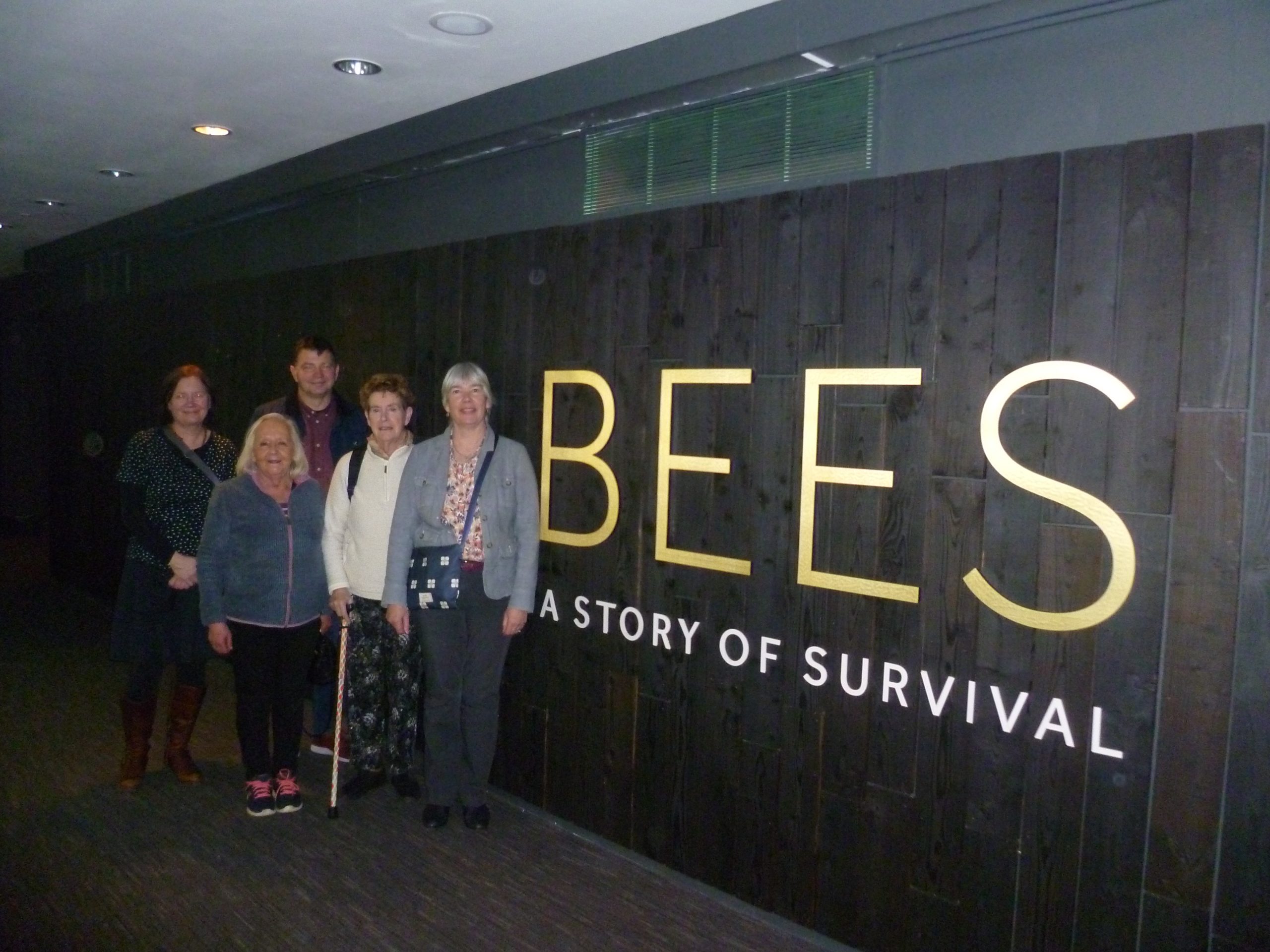
Beekeepers from PBKA and Carlisle BKA visited the ‘ Bees a Story of Survival’  exhibition at the World Museum, Liverpool on 9th March. Fascinating information about how bees have evolved from wasps, the thousands of different types of bees that exist globally and the ways in which they continue to survive against all the odds was provided through films, interactive displays and models highlighted by hi -tech colours, lighting and sounds.   An absolutely amazzzing experience!


Posted on

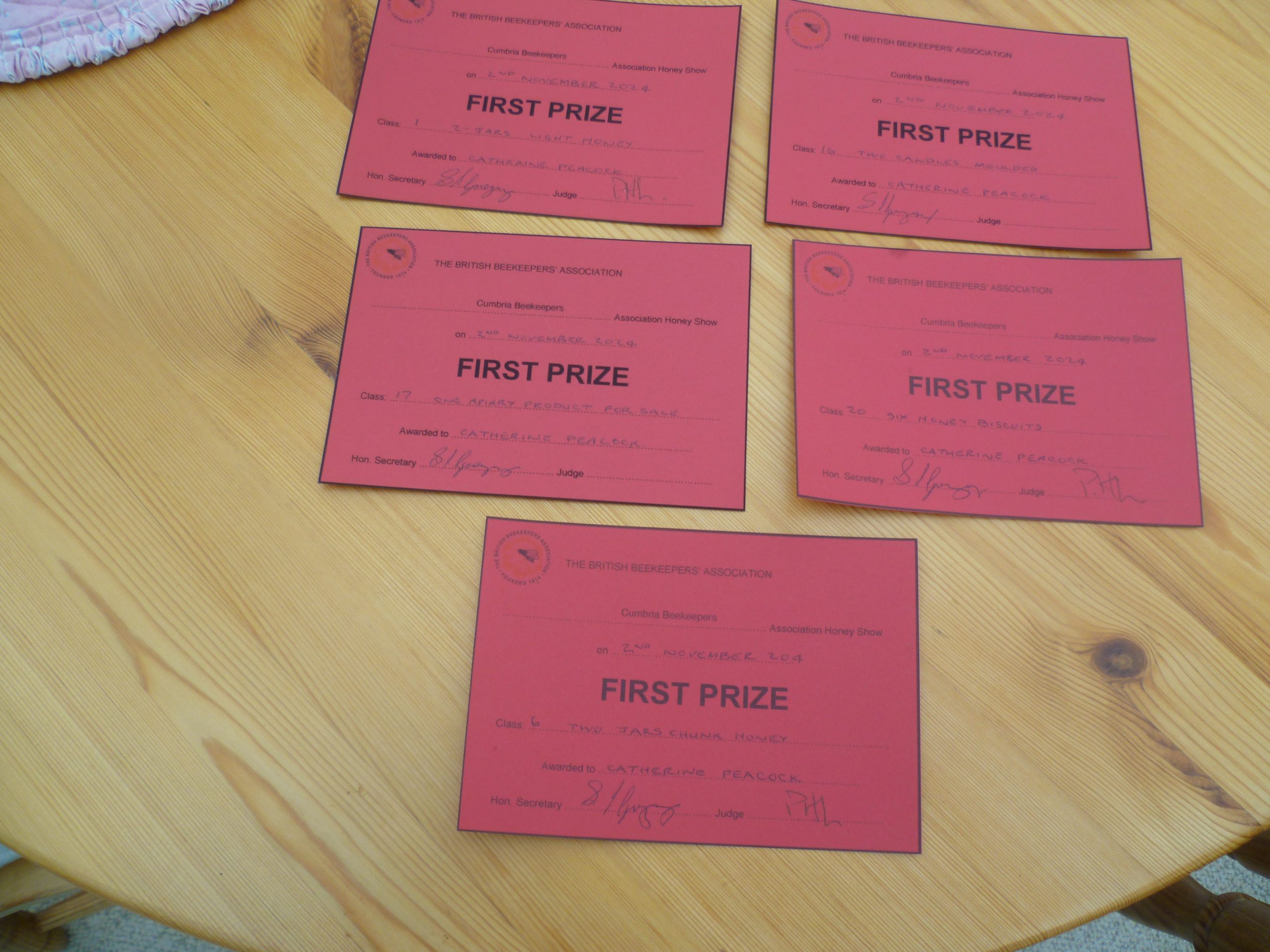
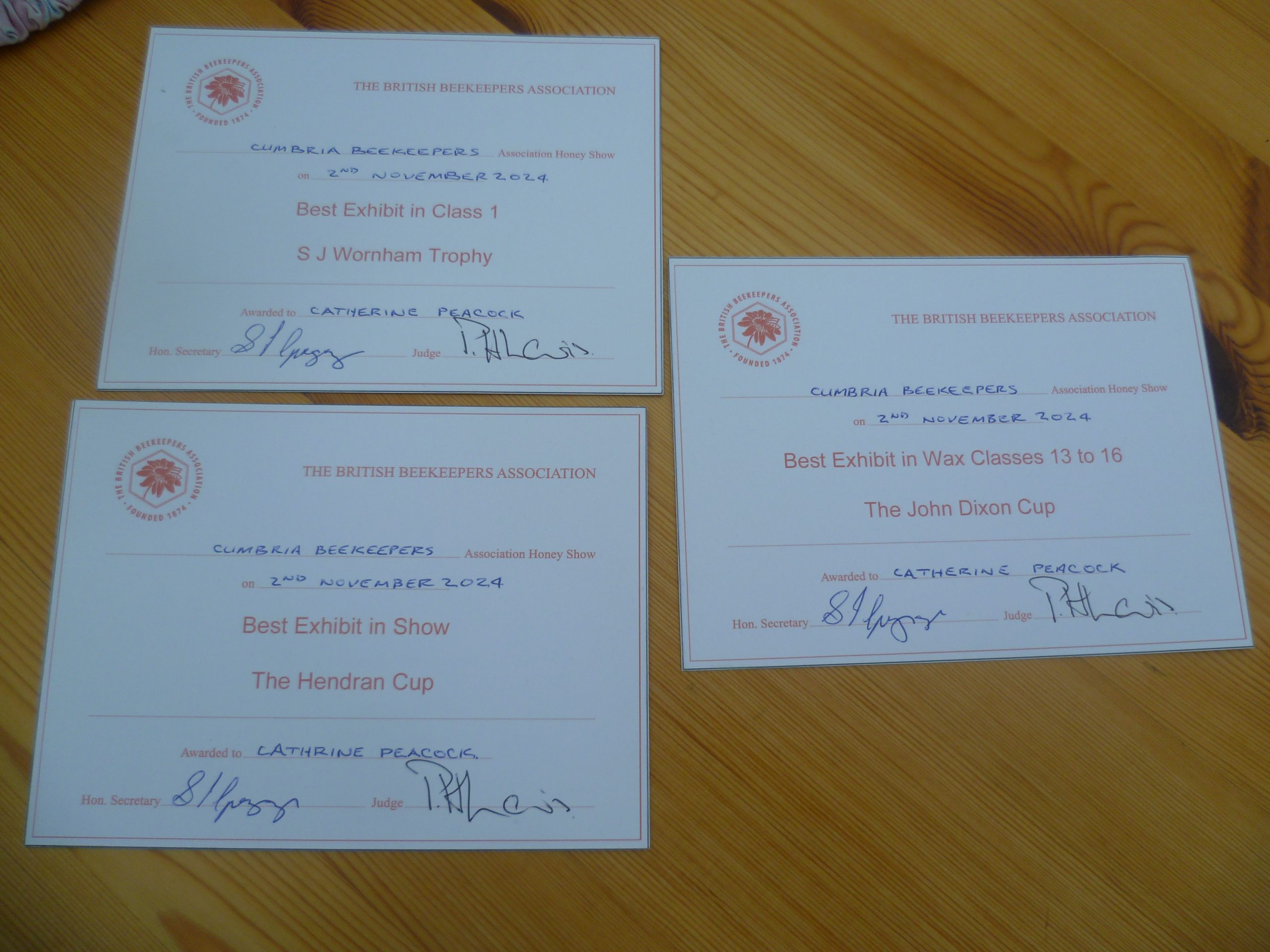
Congratulations to Kate

on her achievements at the Honey Show.

Including being awarded ‘Best in Show’ rosette.’

Unfortunately two of the cups she was awarded have not been returned to CBKAA so if they eventually arrive we will need to do another photo update!

Posted on

Winter Programme

Tuesday 17th December

7.30. p.m.

Zoom

Presentation by Buckfast Beekeepers :

Preparing for Spring – Don’t idle your winter away. Get ready for the great awakening and be looking at it not for it!
Every year is different, but a good beekeeper should be ready for any eventuality (just like a bee!)
How to support your girls for a great season ahead.

Zoom meeting Login details sent by email & also posted on Members section

Wed 29th January  7.30. p.m.


Zoom


All About Bumblebees’ : presentation by Charlotte Rankin, Cumbria Wildlife Trust

While hibernating queen bumblebees are tucked up underground awaiting spring, why not grab a warm drink and join Cumbria Wildlife Trust for an evening talk about bumblebees?

Charlotte from Cumbria Wildlife Trust will provide an introduction to bumblebees, their lifecycle, species that call Cumbria home, and how we can support them in our gardens and green spaces.

Charlotte  will also share information about Cumbria Wildlife Trust’s work with communities and landowners to create wildflower-rich habitat for bumblebees and other pollinators.

Zoom meeting Login details sent by email & also posted on Members section


Tuesday 25th February

7.30. 


ZOOM

‘Making the most of nucs ‘     presentation by Pamela Hatton   Cheshire BKA


Zoom meeting Login details sent by email & also posted on Members section


Thursday 6th March

7.30.


Zoom

 ‘Swarm Control’:    Presentation by  Keith Bartlem  until recently,  NBU Seasonal Bee Inspector

Spotting the signs! Swarm prevention / control, without panic and dramas!

Zoom meeting Login details sent by email & also posted on Members section


About the presenters

Clare Densley & Martin Hann    Buckfast BKA

Clare and Martin manage the apiary at Buckfast Abbey. They are regular contributors to Bee Craft Magazine and currently provide responses to questions from beekeepers in the ‘Ask the Mentors’ section. Their presentations provide practical advice with reference to their own beekeeping experience and the findings of scientific research.

Charlotte Rankin : Cumbria Wildlife Trust
Charlotte Rankin is a Pollinator Conservation Officer working within the Grassland and Pollinator Team at Cumbria Wildlife Trust. The team works collaboratively to share knowledge, skills and expertise that benefit both grasslands and pollinators in Cumbria. We have delivered projects, including Get Cumbria Buzzing! and Planting for Pollinators, with local authorities, partners and communities to transform green spaces and road verges into pollinator havens. Cumbria’s Plan Bee: A Pollinator Action Plan for Cumbria was launched in June 2023, setting out priority actions for everyone to take forward to help our native insect pollinators.
Pamela Hatton : Cheshire BKA

Myself and hubby Stuart have kept bees for over thirty years (yes – we remember those lovely pre-varroa days when we didn’t know we had it so good!). We worked our way through the BBKA exam system and are now both Master Beekeepers.  I was branch secretary for N. Cheshire BKA for over 10 years until I became Chair of Cheshire BKA, and now it is my honour to be President of the County.  Stuart is Chair of N. Cheshire Branch.

We are both very involved in education in the County, holding various courses through the ‘flying season’ at our Apiary.  We lecture at our Branch theory sessions, and hold beginner practical sessions every weekend through the summer, as well as running a Basic Study group and assessments every year.  Being a keen candle maker and ex-exhibitor, I also run a wax workshop every autumn for the County as well as making honey and beeswax soap, creams and balms which I sell at shows etc.

Keith Bartlem  : Formerly an NBU  Seasonal Bee Inspector

Keith has  kept bees for over 30 years and until the end of the 2024 season was a Seasonal Bee Inspector with the National Bee Unit. He was also a  Seasonal Bee Inspector for four years in the North East of England. As a Seasonal Bee Inspector he has organised Asian Hornet track and trace workshops, and demonstrated at Honeybee health days. Keith also gives talks to Beekeeping associations on honey bee health, honey bee husbandry, honey bee behaviour, and the Asian Hornet.


Posted on

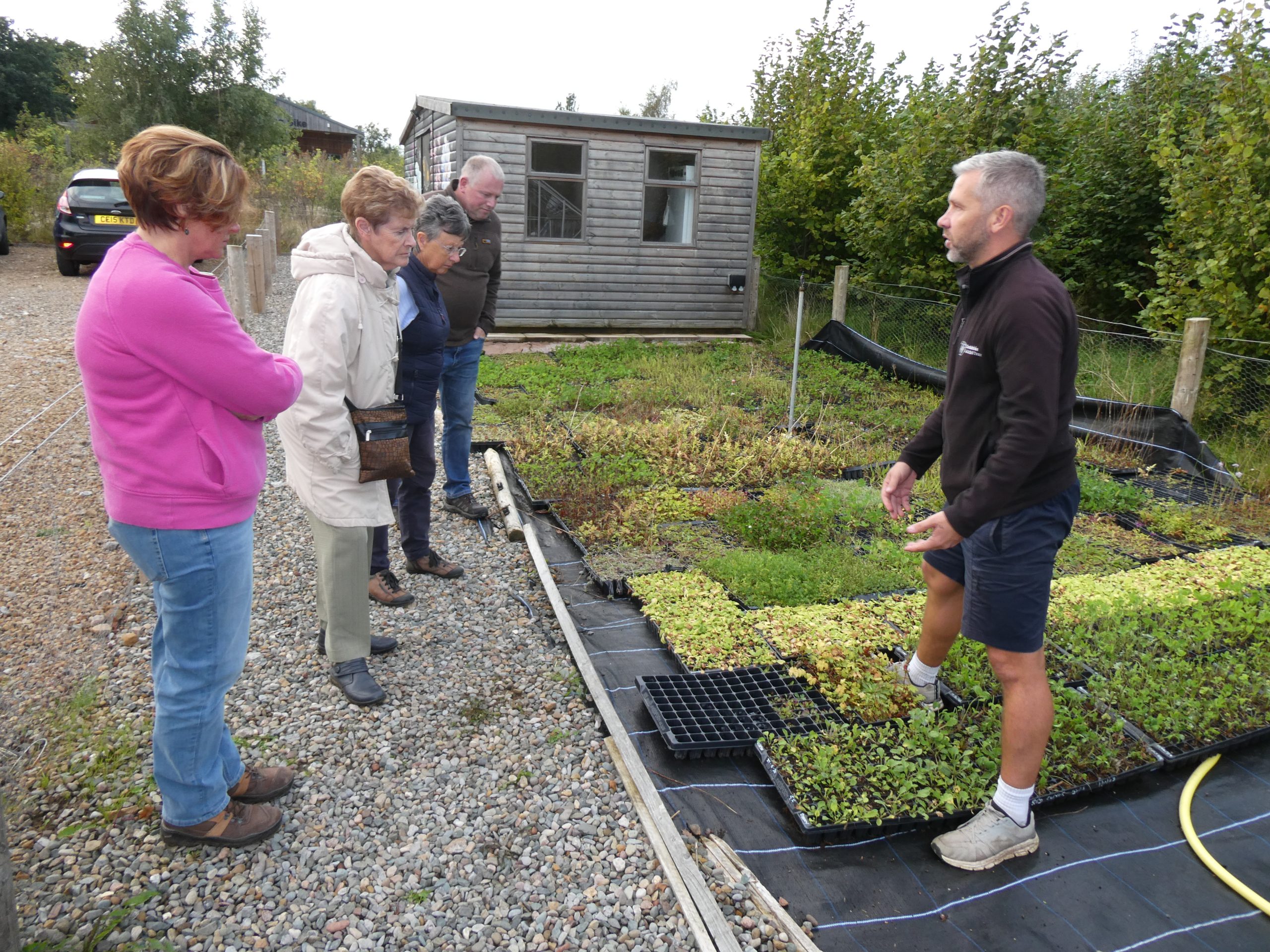
A visit to Gosling Sike

After two previous attempts which were ‘rained off’,  PBKA members eventually managed to visit Gosling Sike on 4th September.  Named after a small tributary of the River Eden, Gosling Sike is an organic working farm and the site of Cumbria Wildlife Trust’s northern office.  The land was  transferred to Cumbria Wildlife Trust in 2012 by Sue Aglionby.  Its development as a wetland wildlife sanctuary has taken place over recent years.

The evening was calm and balmy and it was a pleasure to see bees, dragonflies and other insects flying  around the pond and in and out the dense wetland vegetation surrounding it. Adam McGinley the Site Warden described the stages of its development and their surprise at how quickly the insects discovered the site and how many species in fairly large quantities now inhabit it.

During a walk in the nearby coppiced area we were fortunate to encounter the ‘Hedgehog Specialist’, one of the hardworking volunteers who takes a particular interest in monitoring and caring for the hedgehog population which has gradually expanded to at least 10 of them in recent months.  He described the hazards that hedgehogs face, particularly when they are fed the wrong type of food by well meaning members of the public.   Unexpectedly ‘kitten biscuits’ were particularly recommended, while birdseed and commercially produced ‘hedgehog food’ should be avoided as they contain ingredients that hedgehogs cannot digest.

A quick look at the abundant vegetable plots that are tended by volunteers, was followed by a visit to the facilities that are available for volunteers to make resources such as bird and bat boxes which are then sold to raise funds.  Another interesting facility were the purpose built seed sheds which are kept at ambient temperatures to preserve seeds for storage and replanting . This initiative is managed in collaboration with Kew Gardens which is the ‘seed bank’  for seeds from all over the world  and is designed to preserve their genetic strains for future generations.

The visit concluded with a walk through the poly tunnels where seed plugs were being grown to transfer to areas across Cumbria where the plants need to be replaced.

We were all impressed with the wide range of activities that  Cumbria Wildlife Trust are undertaking on this site to help nature continue to survive and thrive in increasingly challenging circumstances.

Posted on