Excursion to Slovenia

  • During late August and the beginning of September 2022 , Penrith Beekeepers Association led a six day  excursion to Slovenia for a group of 16 beekeepers from Cumbria and other parts of the UK.  The trip was organised by ‘Aritours’ ( a company specialising in excursions for beekeepers world wide) , and their Slovenian based ‘ApiRoutes travel agency’.  They supplied a specialist guide who remained with the group for the week and arranged all the visits to beekeepers and other specialist venues across the country.

In Slovenia, beekeeping is a  way of life. In this small European nation of 2 million people, 1 out of every 200 people is a beekeeper.

The Slovenian government has schemes to raise the awareness of children as young as 3 years old to the value of bees in the environment by providing schools with the financial support to provide ‘honey breakfasts’.   This extends to ‘Pollinator breakfasts/ lunches’ as the children grow older. All educational schemes and capital initiatives to promote and safeguard bees receive 70% government funding.

Slovenia’s commitment to safeguarding and managing bees dates back to the 18th century, when Maria Theresa, the empress of the Hapsburg empire created the first beekeeping school in the world there, appointing Anton Jasna as the school’s teacher.  Today, Jasna is considered the pioneer of moder apiculture and Zirovnica- his home valley- the cradle of Slvoenian beekeeping. World Bee Day is celebrated in Slovenia in honor of Jasna’s birthday. In 2017 it was adopted by the UN General assembly as a day to be celebrated globally. The purpose of the international day is to acknowledge the role of bees and other pollinators for the ecosystem.

The Slovenian approach to beekeeping draws upon ancient traditions but also highly localised practises. In 2002, the government gave conservation status to the Carniolan honey bee, Slovenian’s native bee. It banned the import of other honey bee species to avoid the introduction of new diseases. It also funds a Carniolan bee breeding programme. Today, the ‘Grey Carniolan’ honeybee is the only protected native bee species in the EU. It is particularly valued for its calm disposition. It is also able to survive cold withers with lots of snow, and summers with frequent wind and rain. It continues to forage even in poor weather and collects honey dew from spruce and fir as well as nectar and pollen from other flowering plants and trees. Recently beekeepers noticed that it has a good cleaning instinct which makes it more resistant to varroa.

Slovenians also promote their unique AZ hive, after the initials of its creator Anton Znidersic. 90% of Carniolan honey bee colonies live in these small-scale painted hives designed in the early 20th century. The AZ hives allow beekeepers to  monitor their bee colonies effectively by opening them at the back and sliding out the frames. The hives are arranged together side by side with a roof enclosing them and an integral  room at the back for the beekeeper to sit inside to inspect the bees. Any escaping bees fly to the windows at the side of this room and escape through narrow bee space vents at the top. The gentle nature of the bees, means that they are no threat to the beekeeper when inspections are undertaken in this enclosed space.  The overhanging roof protects the bees from the harsh winter conditions and the enclosed space and warmth from all the hives fitting together provides warmth and insulation throughout the year.  The tradition of hand painting the fronts of the hives with different patterns and murals continues.  Beekeepers also mount the hive houses onto trailer bases so that they can be easily transported to different sources of forage that become available at different times of the year.

The excursion included:

Visits to beekeepers specialising in

  • the production of honey brandy and different flavours of honey, particularly those sourced from trees such as chestnut, acacia and linden.
  • biodynamic beekeeping using honey massage and bee venom treatments and aromatherapy from beehives to cure emotional and physical illness.
  • growing herbs and flowers for pollinators, who also produced dried herbs and homemade preserves to promote healthy diets.
  • the construction of especially designed trailers to transport the bee houses
  • the collection of bee pollen on specially designed trays. The pollen is then used to cure common ailments.
  • queen rearing for distribution of queen bees locally, nationally and globally. (No longer permitted for import into the UK)


Venues that provided specialist information:

  • The headquarters of the Slovenian Beekeepers’ Association
  • The Apilab Carniolan Bee House : with its research and interactive technology about the comparative characteristics of different types of bees .

Tours of different locations:

  • the Karst region where the rocky limestone landscape provides foraging challenges for honey bees.
  • Maribor : the capital of the Styria and the region’s university, cultural and economic centre.
  • Ljubljana : the capital city of Slovenia
  • Postojna Caves

 Comments from the participants included:

Something I will always remember….

  • A really lovely trip to the herb garden.
  • Slovenian Beekeepers Association, amazing 3D bee.
  • The very Modern interactive Museum.
  • And of course the beautiful countryside and all huge variety of trees.
  • I particularly found the biodynamic and Apitherapy talks of interest, as these areas of beekeeping are generally not taken too seriously over here in the UK, so it was refreshing to see how the bees and their products are used in different ways in Europe.
  • The AZ hive was also a bit of an education! – I’ve not seen one of these before and ended up having a very long conversation when I got back with a Romanian beekeeper that I know, who also uses them throughout the more remote mountainous areas of Romania.

I’ve made a brief list of what struck me most about beekeeping in Slovenia:

  • Lots of beekeepers!
  • One thing that’s made a great impression was the fact that the bees take 2-3 days to recover from having their hive opened up, and it loses weight.
  • The national monitoring system of weighing the hives at designated apiaries and location of forage notifications.
  • Their different methods of Varoa treatment, especially the strip across the entrance.(I’d like to find that here in the future)
  • That varroa don’t like a humid atmosphere, bees can keep the humidity high with a solid floor. (Did I understand that correctly?) As bees don’t like damp, I’m thinking it must be in the warmer months which is of course when varroa multiplies with lots of brood being produced.
  • The other pest, we don’t usually see e.g. deaths head hawk moth.
  • The wonderful Carniolan Bee
  • All the fascinating variety of Apitherapy treatments.


Additional comments:

  • We had such a fascinating time in Slovenia, and so lucky with Klaudji  our guide, such a knowledgeable  personable young man. Also of course a lovely mix of fellow beekeepers and their partners.
  • It also goes without saying that our guide Klaudji was exceptional – and that’s putting it mildly! He was so knowledgeable and accommodating – a real asset to Api/ Ari-Tours. I would definitely recommend the trip.
  • I just wanted to take this opportunity to thank you to PBKA for patiently organising and arranging the trip. I had a thoroughly enjoyable time and learnt a thing or two about beekeeping!!
  • An amazing trip….
Posted on

The PBKA ‘Introducing Beekeeping Course’ Review


The PBKA ‘Introducing Beekeeping Course’ run by Julia Pigott and Martin Hoggard was an intensive two day programme based at Greystoke Village Hall.  As well as detailed information about bees and beekeeping techniques it included a practical session inspecting the beehives at the apiary on the Greystoke Castle Estate.  The Feedback Summary below shows the extent to which the twelve participants appreciated the training that they had received.


The next PBKA ‘Introducing Beekeeping Course’ will take place in June/ July 2023 – date to be arranged.


Introducing Beekeeping

Feedback Summary

Course at Greystoke Village Hall : July 2022


Key: % of responses of 12 participants


1=not at all    5=very well 12345
How well has the course met your learning needs?100%
Comments:

-Extremely well, very well to understand everything.

-Provided a good and detailed overview of how to start beekeeping.

-As a beginner and now to bees- this has been fantastic.

-All information very relevant.

-Huge amount covered, but realistic about our memory- so a memory stick was very useful.

-Broad range of essential topics covered in good presentations and practical sessions.

Very practical hands on course, Julia and Martin are very knowledgeable, but also very humble trainers- excellent advice overall.

Incredibly useful overview with lots of detail too


Was the information presented well and clearly?100%
Comments:

-Yes, very clearly, presented well.

-A lot of great information – the memory stick is greatly appreciated and will be well used in the future.

Yes, and it’s great to have the presentation on a memory stick too-thank you!

-Really good pace, informative and opportunity for discussion and questions.

-Excellent

-Very professional- confidence provided by Julia’s professional role + their joint experience.

-Excellent teaching at a slow, steady pace with repetition that helps.

-Mixture of theory and practical training was very effective- slides as pictures vs lots of werds very effective.

-Great pace of information & reinforcement through practice.

Do you feel the weekend provided value for money?100%
Comments:

Yes, very much so, I have been given so much advice.

-Yes.

-Yes very much so- I have been to Acorn Bank a few times , but this course has brought it all together.

We feel that we are trying to give you the foundations on which to build your beekeeping hobby, do you feel you have made a good start? 100%
Comments:

-Yes I feel much more confident to get started now and know what to look out for.

Yes, very much indeed- have thoroughly enjoyed my weekend.

-I feel  a lot less overwhelmed at what I need to do to be a successful beekeeper.

-A good start definitely, however, I think I need a refresher next year before I get bees.

-Excellent start, (Plenty to learn!)

-It helped to cement information previously gained from reading.

-Hopefully that will be provided in practise next year.

-Loves see extraction.

-Really thorough varroa management.


Follow up required:

-Gain confidence to get some bees and get going.

Not sure yet, some bees (ha ha) – may be a refresher course?

-A starter kit list.

-Revision session.

-How many hives supers/ brood boxes etc is it sensible to start with. I know it is an open ended question!

-I need to begin – get a hive and some bees!

– A refresher course next spring.

-Equipment and mentor/ buddy

I think ongoing training like this, with like minded beekeepers is very effective, so indeed March 12th Course is of interest to me- let me know the details. (A.Dorset)

-Mentor would be useful.

-Another course in a year or two.


Most enjoyable aspects:

-The year overview.

-The practical visit to the apiary- you can’t beat seeing it all for real. Overall even though the theory was pitched at the right level.

-Good mix of presentation and practical- it really helps having ‘hands on’.

Probably the practical as I remember that better than the theory, but obviously we needed the theory.  Which was excellent too.

-The practical sessions.  

-Practical and hands on activity.

-All been very good (Great opportunity to handle bees.)

-Meeting some real bees- the bit you can’t get from books or videos.

-Practical visit to the hives.

-The last session in the apiary.

-Not afraid to share sources e.g. brands that have worked or not preferences and why; personal errors that you have shared.

-Mixture of theory and practical tasks – well balanced


Source of information about the course:

PBKA (85%)


Additional comments:

-No, thank you, other than I have absolutely thoroughly enjoyed the whole weekend and was so looking forward to it.

-Thanks to Julia, Martin and Margaret

-Many thanks!

-Looking forward to future courses!

-Thanks for the USB- great to be able to look back.

-Thank you so much for a fabulous weekend- very interesting, accessible and fun learning.

-Just a huge thank you to Julia and Martin for giving us their time and knowledge in this fascinating area- highly effective trainers, and has built my confidence to keep bees now!

Posted on

The Hive Geometrix Exhibition: May – July 2022

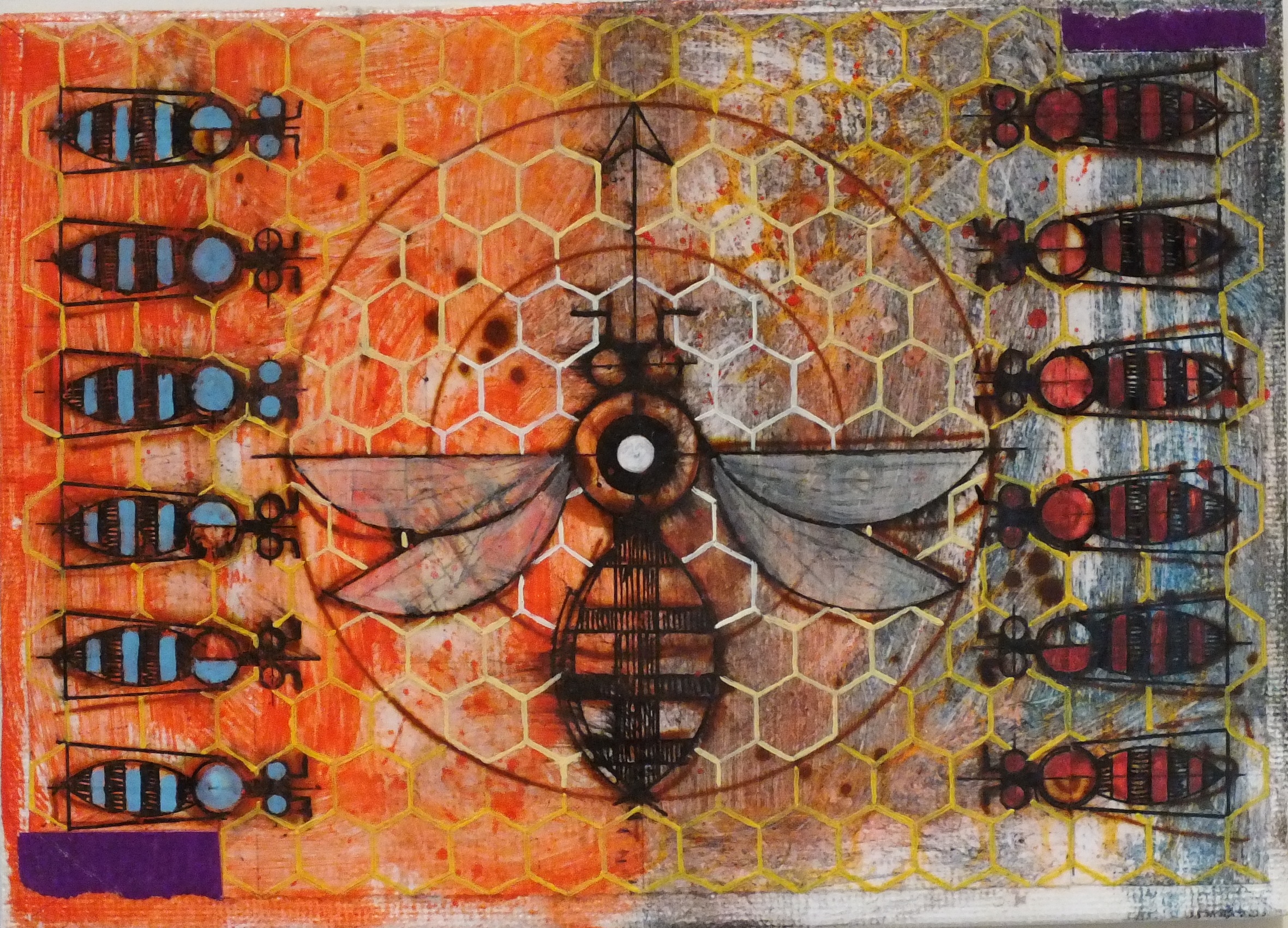
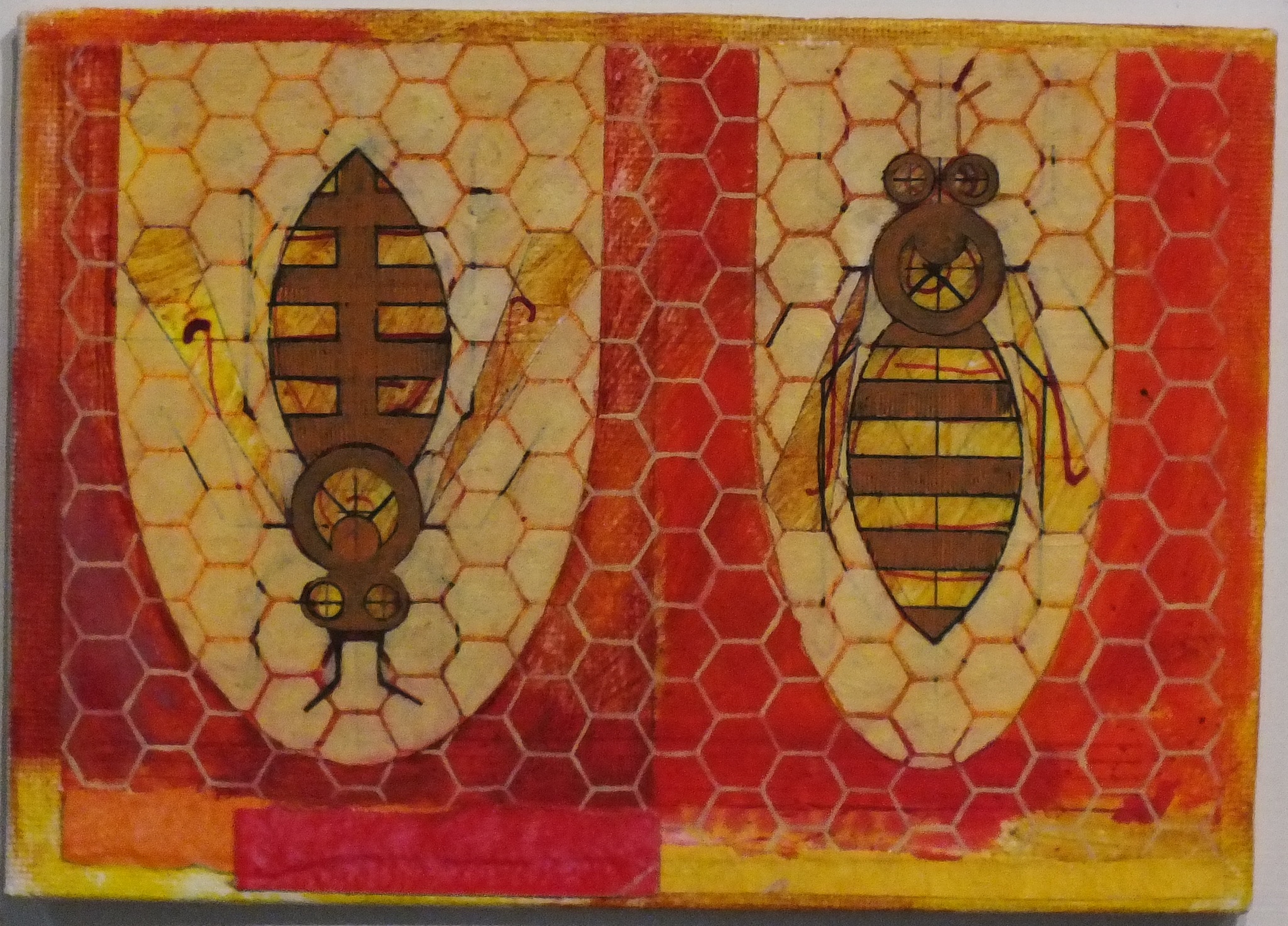
The ‘Hive Geometrix Exhibition’  was held at Upfront Gallery, nr. Penrith  17th May – 3rd July 2022,  showcased Stephen Livingstone’s paintings about the lives of honey bees throughout the seasons.

Stephen Livingstone is a visual artist who is based in Durham. His work deals with human impact upon landscapes and habitats and often involves collaboration with museums and archives, academic institutions and individuals with specialist knowledge and skills. He has developed major projects for the British Library, the National Trust, Durham University and the Museum of Art and Design in New York.

Stephen prepared for the exhibition over a number of years by observing Penrith beekeepers at work, participating in hive inspections and honey extractions and studying how bee colonies change throughout the seasons. The vivid images he created illustrate the impact of seasonal patterns on the ways in which honeybees work together to reproduce, collect and manage their stores of pollen and nectar and cluster over the winter months. He has also been instrumental in selecting photographs taken by association members to complement the paintings.

Stephen says this about his paintings:

‘Beehives are places of mystery and magic. Even beekeepers, who over many centuries have developed an intimate, symbiotic relationship with honeybees, can never properly understand nor fully visualise the complex inner-workings of their hives.

In my paintings I imagine the inside of a working beehive, representing the activities of the queens, workers and drones throughout a bee year, portraying, in symbolic form, their political and social activities and often desperate efforts to survive, aided and abetted by the interventions of their human guardians. The paintings are cutaways, architectural diagrams of the interior structures of a beehive, each panel representing a particular part of the hive, the colours selected and layered in order to evoke the light and scent sensing experiences of the bees.’

A large mobile, ‘Dancing Bees’, was created by the pupils of Temple Sowerby School to hang in the exhibition area.   PBKA aims to raise awareness of the value of bees to the environment, the issues that are causing their decline and how they can be helped to survive.  It provides schools with opportunities for their children to learn about bees through cross curricular programmes. Between January – March, Key Stage 2 pupils at Temple Sowerby Primary School worked with visual artist, Ali McCaw and beekeepers Alex Wilkinson, Jane Taylor and Margaret Riches. Through interactive learning activities, the children discovered how honey bees in particular, communicate with each other, pollinate plants and produce honey . They used observational analysis to identify the characteristics of bee friendly plants and created their own designs of a ‘perfect flower’ for bees and large models of honey bees.

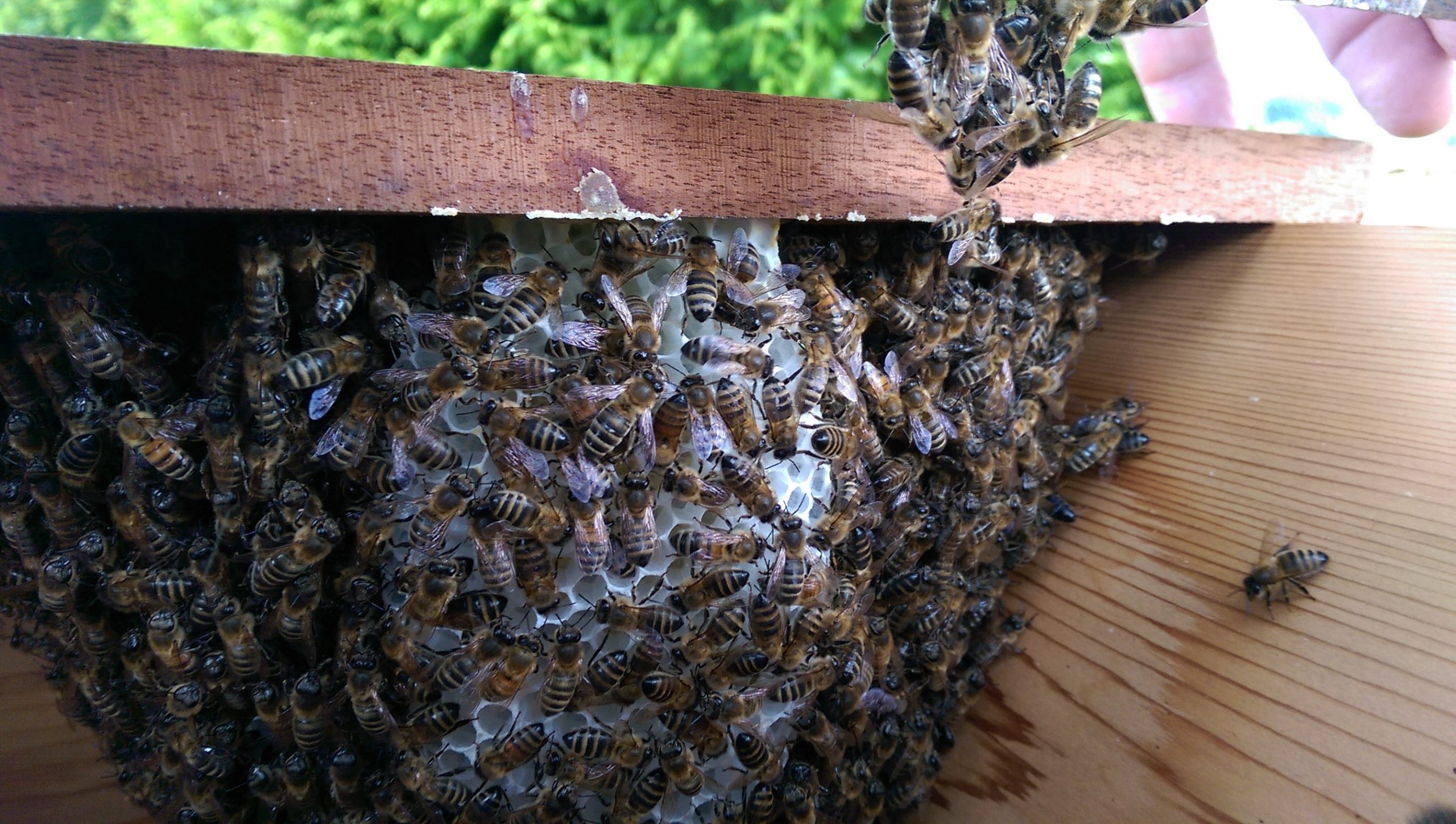
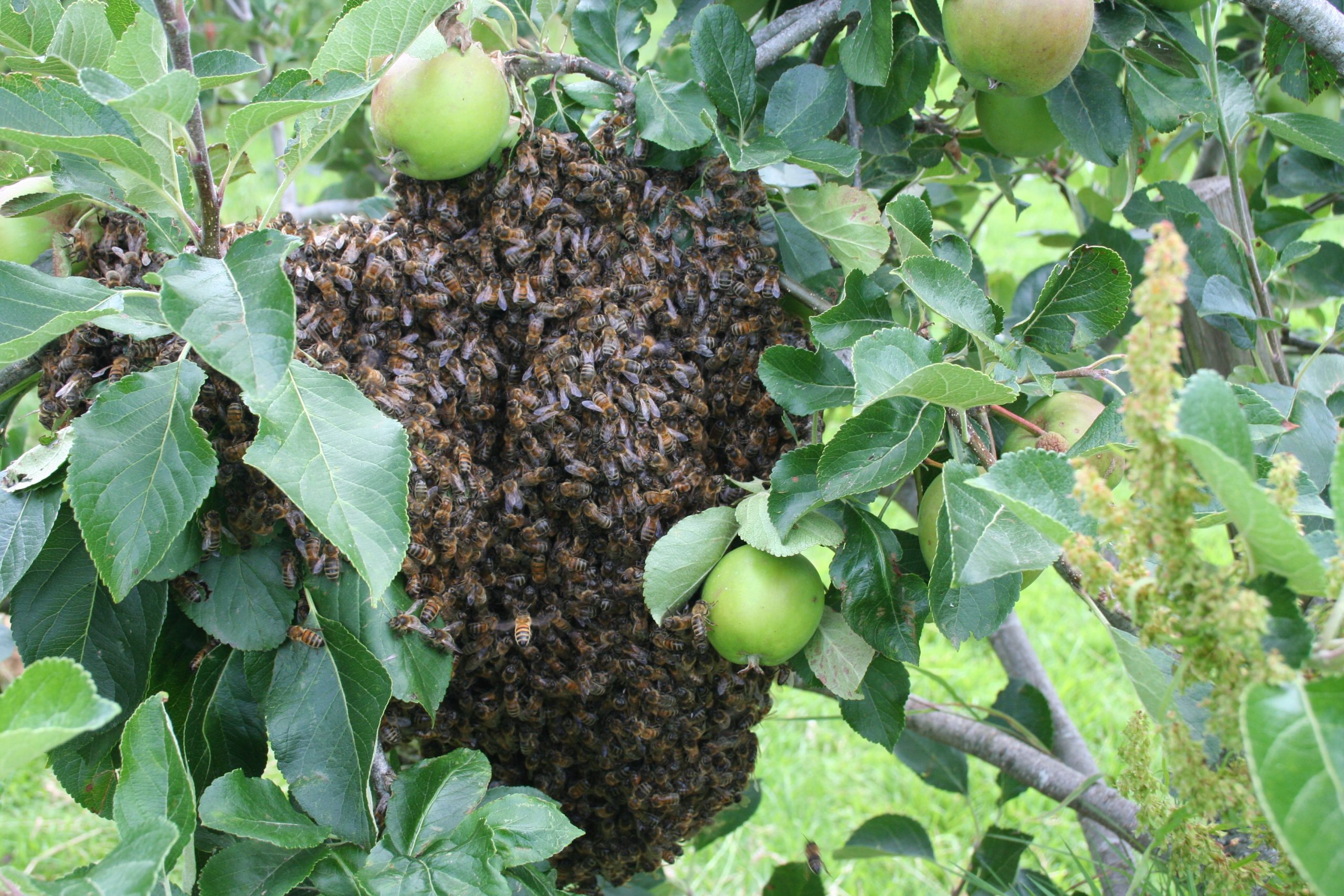
Alongside Stephen’s paintings, Penrith Beekeepers Association displayed ten panels of information about bees and beekeeping activities to provide additional information. This display also included photographic prints of ‘bees in action’ that had been taken by beekeepers for the PBKA Calendars.

A note book was provided in which visitors to the exhibition were invited to provide their comments. These included the following:

17/5/22  ‘An excellent and informative exhibition – MOST interesting!’ D.Spence, Appleby

18/5/22  ‘Lovely art work, particularly good to see the link with local schools.’ M&R Houston

18/5/22  ‘Absolutely first rate.’  A. Beetie

‘Beautiful paintings – extraordinary.’  Red Silktone, Shropshire

22/5/22  ‘Incredibly and fascinating exhibition. Art work superb. Wonderful colour combinations. Are you going to produce a book?’ Romey Chaffer Durham

‘Absolutely stunning!’

‘My favourite one was queen cups. It is so beautiful.’  Esca B

‘I really enjoyed it.’

‘Fabulous I need much more time to fully appreciate it!’

‘Brilliant! Especially love the high flying bees.’   Janet

‘Couldn’t resist coming again. Enjoyed it just as much. Thank you’   Romey

‘Absolutely fantastic! Wonderful work – beautiful and fascinating- the detail is extraordinary. I love the surface quality.’  Janet Snailey

‘Great exhibition, bringing design and knowledge with awareness of the power of the bee.’ Gloria

‘Superb combination of knowledge, skill and creativity. Excellent show.’  Andy

‘Very informative and interesting’  Kathleen

9/6/22 ‘What a great show! Great combination of aesthetic and storytelling . I spent ages enjoying and absorbing- fantastic!  Johnnie Foker  Durham

18/6/22 ‘Plenty of information to digest + interesting ID of Asian Hornet as against the European Hornet.’  WAA

22/6/22 ‘Best ever exhibition put on here at Upfront!  Thank you’ Daphne Honey

22/6/22 ‘Very Very fun and stuff – merci beaucoup’  Jeremy Honey

30/6/22 ‘Very very interesting exhibition  Pleased we came. Love all the dancing bees especially the furry faces.’ Frances Allan

1/7/22 ‘This is excellent. I want to go back to Carlisle and meet up with some beekeepers to find out more!’  G. Stables

‘Just wonderful, vibrating noisy paintings.’  Christina Thwaite

‘Beautiful paintings showing the order and structure and movement of the bee world.’ Tinks Weinell S.A.

6/6/22  ‘We thought it was wonderful.’   Alex Playford

6/6/22  ‘Really felt the knowledge and passion beneath the surfaces of these works of art, wonderfully compelling and the intricate attention to the structure and geometry really gives the feel of a hive’s inner workings.’   Lucy Playford.


Photographs were taken by Ian Smith and David Wheeler.

During the period of the Hive Geometrix Exhibition, PBKA also ran other events at Upfront Gallery:

  • ‘Gardeners’ Question Time’ attended by people who posed questions about their gardening issues to a panel of experts.
  • ‘Bee Hotel Workshops’ which provided opportunities for families to learn more about bees and make a bee hotel to hang in their garden in which types of  solitary bees can lay their eggs.
  • ‘Pop up Shops’ to sell bee products created by the members and friends of PBKA and their bees.
Posted on

Bees in Action Pictures

These photographs of ‘bees in action’ were taken by members and friends of Penrith and District Beekeepers Association (PBKA).

They were originally selected by Stephen Livingstone for inclusion in the editions of the PBKA Calendar which has been produced annually since 2017.

Prints of these photographs are available for purchase : £10 each. This includes postage and packaging. Each picture will be printed in colour on 260gsm photo paper with a satin finish . The only size available is A4.

To order any of these prints, contact Margaret Riches :

Please note that copyright belongs to Penrith and District Beekeepers Association and the pictures should not be reproduced without permission.

Posted on

Introducing Beekeeping 30th -31st July 2022

At Greystoke Village Hall, near Penrith CA11 0TW

Julia Pigott & Martin Hoggard will run the Introducing Beekeeping on behalf of PBKA. It will be of interest to anyone who would like to become a beekeeper as well as those who have started beekeeping, but consider themselves to be beginners.
Julia is a highly experienced beekeeper and trainer. She and Martin run the Brigsteer Bee Reserve, just outside Kendal. More information about Julia, the Bee Reserve and her training programmes, along with course feedback, can be found at www.BeeEd.org.uk
Introducing Beekeeping is a two day course.

It will run on the following weekend: Saturday 30th July and Sunday 31st July.

Day one will commence at 9.00. (registration) and finish at 5.45.p.m. (Includes colony inspection)

Day two will commence at 9.00. and finish by 5.00.p.m.

The course will combine theory with practise and will involve an introduction to all the basic skills needed to become a competent, confident beekeeper
Fee: £100 this includes: tuition; loan of kit; information to take home; light refreshments, EXCLUDING lunch. Participants may bring their own packed lunch or a lunch can be pre-ordered from the Boot and Shoe Inn which is opposite the Village Hall. The lunch menu and prices will be available during course registration so that pre-orders and payments can be made on arrival.

Concessions: £90 PBKA Members £70 *students in full time education.
*Minimum age 12 years. Students U.18 must be accompanied by an adult who is parent/guardian or officially acting in ‘loco parentis’ and is also attending the course.
Places are limited. To reserve a place please contact PBKA asap: see below.
Closing date for applications: Thursday 30th June 2022.

Cancellation: unless PBKA cancels the course, refunds for cancelled places cannot be made after 30th June 2022.

YOU CAN DOWNLOAD THE FLYER FROM This Link

FOR AN APPLICATION FORM & COPY OF THE PROGRAMME. Follow this Link

Alternatively you can contact Margaret Riches (PBKA Treasurer).
TEL: 01768 894404 or E mail:

Posted on

2022 PDBKA Calendar preview

The PBKA 2022 Calendar is now on sale at the following retailers in and around Penrith:
Eden Gallery & Tea Room, St. Andrews Churchyard; Star Fruits Greengrocers, Angel Lane; Rooting4U Greengrocers, Devonshire Arcade; Richardsons Timber Merchants; Coomara Vets, Carlisle; Beehive Inn, Eamont Bridge; DTEC Computers, Scotland Road; Booths; Heather Glen Hotel, Ainstable; Jan’s Homemade Cakes, near Ainstable Church (on Friday mornings only); Penrith Station; Penrith Building Society; North Lakes Hotel, Penrith; Honda Garage, Kendal;
Posted on